This guide explains Commercial Electric Car Charging Points Installation—from planning and compliant electrical design to contractor selection, expected costs, and operational readiness. It provides objective background on charging infrastructure, grid considerations, site surveys, and safety practices, helping businesses in nearby areas choose suitable equipment and avoid common installation mistakes.
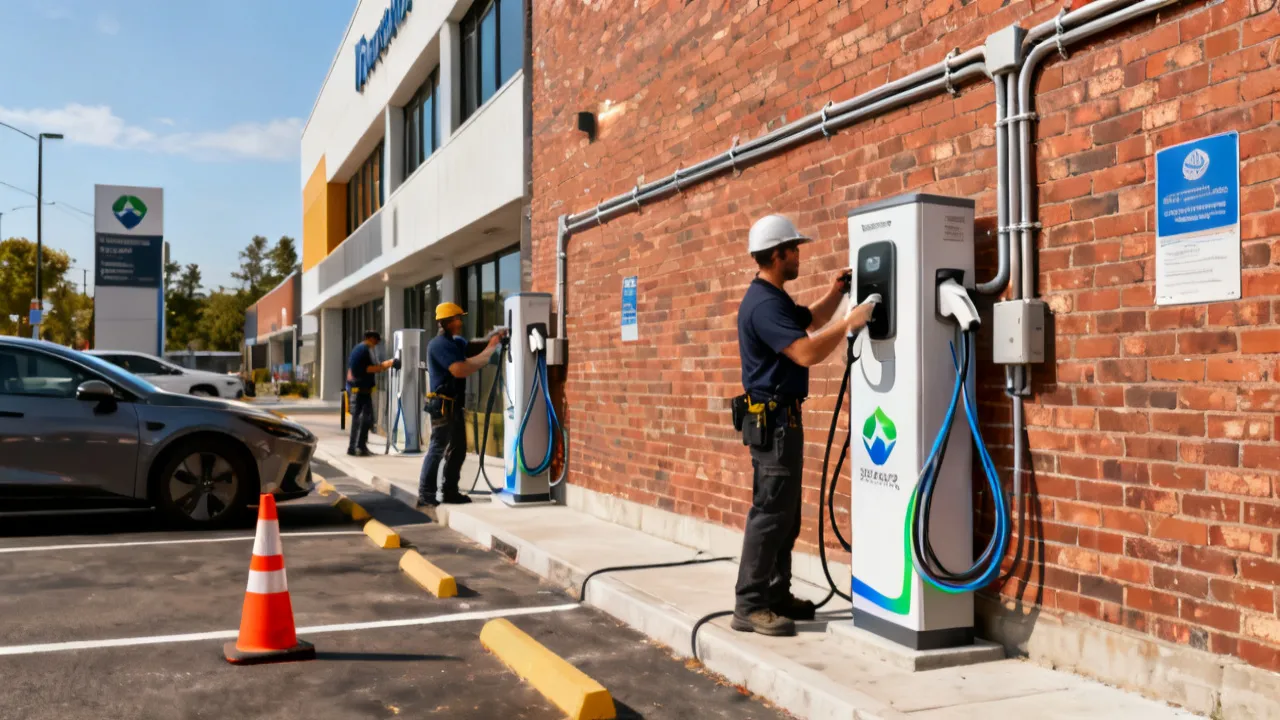
Commercial Electric Car Charging Points Installation should begin with a structured site assessment and a grid-aligned electrical design—because the main determinants of cost, timeline, and reliability are demand planning, power availability, and compliance requirements. For businesses and property operators, choosing the right charger type, confirming electrical capacity, and specifying installation quality standards upfront typically prevent delays, change orders, and underperforming hardware.
From an industry standpoint, “fast installation” is rarely the top outcome if it compromises cable routing, earthing/bonding, load management, weatherproofing, or commissioning testing. A professional installation is measured by good uptime, safe operation, and predictable energy use—especially in commercial settings where chargers may be used throughout the day by employees, customers, fleets, or residents.
In practice, many commercial projects succeed or fail not on the charging equipment itself, but on the decisions made before a cable is pulled: what kind of occupancy you have, how people actually arrive and plug in, which hours are busiest, what the landlord permits in terms of civil works, and what the utility supply can practically support during peak demand. A robust installation plan takes all of these into account, aligns responsibilities between parties, and sets clear expectations for handover documentation and ongoing maintenance.
To put it simply: you can install a charger quickly, but commercial operators need something that performs reliably under real-world usage patterns, under local environmental conditions, and under regulatory safety requirements. That means engineering competence, disciplined project management, and thorough commissioning. Those three items together create a charger network that is safer, easier to operate, and more cost-effective over the full lifecycle of the site.
When stakeholders discuss installation, they often focus on the visible equipment—charging pedestals, wall units, or bollards. Yet the invisible work frequently defines performance:
In commercial deployments, these factors also affect customer experience: a charger that frequently trips protections or throttles unexpectedly can lead to dissatisfaction and lost utilization. For property managers, that dissatisfaction can translate into complaints, refund requests, service-level disputes, reputational damage, and expensive troubleshooting under time pressure.
Quality in commercial EV charging also means repeatability. If you have multiple sites—retail parks, logistics depots, multi-tenant estates—you want an installation approach that delivers similar performance and documentation standards across each location. That requires standardised design templates, consistent cable management, repeatable commissioning steps, and a service model that makes troubleshooting systematic rather than reactive.
Another often overlooked driver of installation quality is “operational fit.” A technically correct charger installation can still disappoint if the mounting location is awkward for users, the cable length or connector placement creates practical inconvenience, the access control creates friction, or signage is unclear. In commercial contexts, the charger is part of an experience: people notice if the equipment is hard to use, difficult to find, or consistently unavailable.
Therefore, installation quality should be assessed across at least four dimensions: electrical safety and code compliance, functional reliability, ease of use for the customer or user, and maintainability for the operator or facilities team. A good installer designs and documents all four dimensions during the project—not after commissioning when issues appear.
Cost varies widely by site conditions, power availability, number of charging points, civil works needs (trenches, ducting, reinstatement), and whether a new supply or upgrade is required. In professional quoting, reputable suppliers and installers typically separate costs into components so you can validate assumptions.
Common cost components include:
Industry caution: If a quote bundles everything without stating what electrical work is included, it becomes difficult to compare proposals fairly. A lower price that omits grid upgrades or only covers “like-for-like” assumptions can lead to change orders later. A change order is not always “bad,” but it becomes costly and disruptive when you only discover cable route conflicts, supply limitations, or reinstatement scope after the project has already started.
To budget responsibly, commercial buyers should also consider the following cost drivers that often surprise non-technical stakeholders:
Commercial budgeting should also include “aftercare” costs: charger cleaning, connector inspections, firmware or network updates, and periodic integrity checks of enclosures and protective devices. Even the best charger equipment will require human oversight and preventive maintenance to sustain uptime over years.
For Commercial Electric Car Charging Points Installation, supplier credibility matters at least as much as equipment specification. The charging ecosystem includes hardware, installation practice, commissioning, and—often—software management. A strong supplier relationship can reduce downtime and improve good control.
When evaluating suppliers, consider these objective checks:
Even if you select high-end hardware, a weak installation process can undermine reliability. Conversely, a well-installed system with appropriate load control can deliver stable performance even as usage patterns evolve. In commercial settings, equipment reliability is strongly linked to mechanical and electrical workmanship: proper termination, correct cable protection, correctly rated glands, correct ingress protection approach, and accurate commissioning of protection settings.
It is also worth verifying how the supplier handles “edge cases.” For example, what happens if a site discovers additional existing services in the trench route? How are those conflicts handled? Do they provide a revised method statement and re-plan with minimal disruption? How do they manage documentation when the final cable route differs from the initial design drawings? A professional supplier has a process for these inevitable real-world variations.
Another practical check is the supplier’s approach to commissioning. Ask whether they perform full safety checks and functional tests, and whether they provide a commissioning and test documentation pack. A charger installation without credible commissioning evidence is difficult to audit later if there are operational issues, insurance claims, or compliance inspections.
A professional workflow is usually predictable. The top contractors treat Commercial Electric Car Charging Points Installation as an engineering project, not just a plumbing-and-wiring job.
Following this sequence reduces risk. It also improves transparency for landlords, facilities managers, and procurement teams who must justify spend and ensure regulatory alignment. A clear project plan also prevents the most common commercial failure mode: installing hardware before a complete electrical design is verified. When that happens, the site may still “function,” but it can become unpredictable during peak usage, and the operator loses control over energy spend and user satisfaction.
Commercial planning should also consider phased rollouts. For example, a company might install two chargers initially, then expand to four or six once demand stabilises. In that case, the initial design should include spare conduit capacity, reserve space in distribution boards (where feasible), and load management parameters that can be adjusted rather than reworked. You can install in phases without sacrificing long-term design integrity, but that requires intentional planning from day one.
It is also useful to align the installation plan with the organization’s change control process. Many commercial properties are managed with strict procurement and asset management workflows. Installers should provide design documents and a commissioning package in a format compatible with internal asset registers. That makes it easier for the business to track warranties, maintenance schedules, and inspection dates.
Commercial deployments are not only about “install and forget.” Several operational requirements should be addressed during planning:
In many businesses near transport hubs or high-footfall retail streets, these issues show up quickly once chargers attract real demand—especially if marketing campaigns or seasonal events increase usage. The operator may see spikes in usage that exceed forecasts. If the design includes load management but lacks robust operational reporting, the business might not realise the chargers are throttling until customers complain.
Another operational requirement is user behaviour management. Even if the charger is correctly sized, user patterns can be surprising. For example:
Operational readiness means anticipating such behaviour and ensuring the charging network configuration supports it. Load management, access control, queue logic, and signage all contribute to reducing friction and improving utilisation.
Businesses also often underestimate maintenance complexity. Connectors and cables are exposed to weather, frequent plugging, and mechanical stresses. Even when a charger is IP-rated, repeated cleaning with inappropriate chemicals, or physical impacts from vehicles, can compromise enclosures or lead to nuisance faults. A good installation includes not only resilient hardware but also safe cable routing and mechanical protection where needed. An operator with a clear preventive maintenance schedule can catch issues before they become downtime events.
The following comparison and guidance are designed to help decision-makers evaluate approaches to Commercial Electric Car Charging Points Installation. Use it to align expectations across procurement, facilities, and operations.
| Topic | Option A: “Initial Rollout” Focus | Option B: “Expandable Platform” Focus |
|---|---|---|
| Primary goal | Install a small number of chargers quickly to validate demand | Design for growth from day one (more points, more power, smarter control) |
| Electrical approach | Use available capacity with limited load-sharing requirements | Plan dedicated circuits where needed and include smart load management |
| Cabling and civil works | Minimal trenching, “as required” routing | Allow conduit spare capacity and future routing paths |
| Operational tooling | Basic charger controls and limited backend reporting | Centralized monitoring, access control integration, and reporting readiness |
| Typical risk | More frequent revisits if demand outgrows capacity | Higher initial planning cost, but often fewer change orders later |
| Top fit | Short-term pilots, smaller sites, clearly bounded demand | Multi-site operators, fleet strategy, and sites expecting expansion |
From a practical viewpoint, Option A can be a sensible path for very bounded pilots—particularly if there is confirmed capacity and you’re certain that you won’t need to scale beyond a small number of points. However, commercial organisations frequently underestimate the speed at which EV adoption and charging demand can grow, and they often find themselves needing additional capacity earlier than expected.
Option B is commonly preferred for multi-site operators and property developers who are positioning EV charging as a long-term asset rather than a near-term experiment. Even though Option B can involve higher planning work at the beginning, it typically reduces overall disruption. That’s because upgrades after installation often require repeating civil works, re-opening pathways, and potentially revisiting cable routes or protection coordination.
Whether you choose Option A or B, the central principle remains the same: design decisions should protect safety and compliance first, then optimize for operational reliability and expandability. Expandability is not just “leave space in a board”—it also includes planning conduit paths, anticipating cable segregation requirements, and configuring load management to adapt when new points are added.
Before requesting pricing, organizations can reduce uncertainty by providing the right inputs. This improves comparability between suppliers and helps installers confirm feasibility without excessive assumptions.
A good quote is not only a price. It is a written commitment to assumptions, responsibilities, and outcomes. When quotes are vague, project teams later discover mismatches between what the buyer expects and what the installer planned for. To avoid this, ask suppliers to include clear assumptions in their quotation, such as:
Commercial buyers can also speed up feasibility verification by sharing drawings of the site, distribution boards, and any known service corridors. Even basic photos and rough site plans help. The more accurate your inputs, the more accurate the quote. Accuracy reduces the likelihood of mid-project changes, and it supports smoother commissioning because the installed infrastructure matches the design intent.
Every site is different, but professional installers commonly manage these requirements for Commercial Electric Car Charging Points Installation:
For commercial properties, these requirements often extend beyond the technical scope. For example, some property managers require that works avoid cutting into specific service zones, or they require permits before any excavation begins. Others require that reinstatement matches existing paving patterns exactly and includes specific materials. Professional installers recognise that these requirements are part of quality delivery, not administrative overhead.
Another important expectation is that the installation is resilient to everyday operational conditions: vehicle impacts, accidental knocks, exposure to cleaning chemicals, humidity, and temperature variation. A well-installed charger should withstand not only rain and frost but also the mechanical realities of a parking environment.
Commissioning quality is also a condition that you should explicitly require. A commercial installation should not be considered complete until safety checks are validated, functional tests are performed, and appropriate documentation is delivered. In some jurisdictions, there may also be additional inspection requirements. A professional supplier helps the customer anticipate those steps early and includes them in the project plan.
The market for EV charging has evolved from early pilot installations into structured infrastructure planning. Two trends shape Commercial Electric Car Charging Points Installation today:
In addition to those two trends, there is growing sophistication in how operators think about data and interoperability. Many businesses require session-level reporting for internal sustainability reporting, customer billing, or chargeback processes between tenants. That means installations must be compatible with the chosen backend platforms and data formats. If you plan to integrate charging with a property management system or fleet management tools, you need to confirm compatibility early during design and commissioning.
Another shift is increasing emphasis on cyber and network hygiene. Connected chargers rely on software updates and network access. Installers and suppliers should help ensure that the operational model for updates is clear, that default credentials are handled appropriately (where relevant), and that any backend integrations are maintained with secure practices. While cyber security responsibilities may vary by supplier and by contract, the commercial operator should still ask for clarity on responsibilities.
Objective background: The International Energy Agency (IEA) has emphasized that charging infrastructure growth must be paired with grid readiness, planning, and predictable standards to ensure reliable deployment. For authoritative context, see IEA reporting on EV charging and the electricity system integration challenges.
Source (reliable industry/government): International Energy Agency (IEA), “Global EV Outlook” and related EV charging and the electricity system integration materials (latest editions available on the IEA website).
Because commercial charging networks often operate for many hours a day, electrical design decisions have direct implications for reliability, uptime, and safety. While end users may not notice the details, the electrical system governs whether chargers consistently deliver the expected power without nuisance tripping or long-term degradation.
Key areas to consider in electrical design include:
Another reliability factor is how the system handles shared power. Load management can protect the site from overload, but it must be implemented correctly. A load management configuration should be tested under realistic scenarios, including multiple simultaneous sessions. The operator should also understand how the system behaves when site power is constrained—e.g., whether charging slows, pauses, or allocates power fairly between ports.
In well-engineered systems, users experience predictable behaviour, and the operator experiences controlled energy spend. In poorly implemented systems, users may see inconsistent charge rates, extended session times, and increased fault notifications—leading to operational confusion.
Commercial charging points are often installed in environments that are busy, exposed, and full of other services. Cable routing and physical protection influence not only durability but also safety and serviceability.
In a commercial car park or loading area, typical hazards include vehicle movements, cleaning vehicles, occasional impacts, and sometimes vandalism. Cables routed without adequate mechanical protection may suffer damage over time. Similarly, poor segregation from other cables can increase interference issues or lead to problems with future maintenance.
When assessing cable routing design, installers should address:
Cable routing also impacts commissioning. If installed differently from the design drawings, the as-built documentation must accurately reflect the final configuration. A strong installation process includes updating documentation and providing an as-built record so that the operator or future contractor can troubleshoot quickly.
Commissioning is sometimes treated as a final administrative step, but in commercial settings it is a critical verification process. It ensures that the charger behaves safely and correctly under operating conditions.
Commissioning evidence typically includes:
From a buyer perspective, “commissioning evidence” matters for several reasons. It supports compliance checks during inspections. It also provides an authoritative baseline if faults occur later. Instead of guessing whether the fault is caused by installation workmanship, a cable issue, or a later change to the site electrical system, the operator can compare current behaviour to the commissioning baseline.
Commissioning evidence also reduces risk around insurance and contractual disputes. In commercial environments, downtime is expensive, and disputes can be time-consuming. Having proper test records and clear handover documentation makes it easier to resolve issues quickly and fairly.
Commercial charging projects vary significantly depending on the type of site. Understanding common scenarios helps buyers ask the right questions and choose appropriate charger configurations.
1) Workplace and office car parks: Users often have long dwell times. AC charging is commonly suitable. Load management helps because peak usage might align with shift changes and lunch breaks. Signage and user guidance are important because some employees may not be regular EV drivers.
2) Retail and hospitality sites: Dwell times can be unpredictable. Users may arrive for short visits or may browse longer. Operators may require flexible power allocation and user-friendly access control. If payment is used, the user experience can influence demand and satisfaction.
3) Multi-tenant estates: Complexity increases because responsibilities for power upgrades, shared distribution boards, and maintenance can be distributed across parties. Tenants may have different access needs. The installation should include clear responsibilities and documentation for each party. Operational reporting may need to be segmented by tenant.
4) Logistics depots and fleets: Fleets often have predictable schedules and may require reliable, high-throughput charging. DC may be considered depending on vehicle turnaround needs. Uptime is critical. Installation should prioritize ease of maintenance, spare parts planning, and robust fault-response arrangements.
5) Residential mixed-use with commercial elements: Parking may be shared between residents and visitors. Charging access policies are often more complex. A platform that supports authentication, scheduling, and clear user instructions is particularly valuable.
In each scenario, the “best installation” is not simply the cheapest. It is the installation that matches the expected charging pattern, power availability, user behaviour, and operational maintenance capability.
Smart features are sometimes promoted as optional add-ons, but for many commercial environments they solve real operational problems. Load management, in particular, can be the difference between chargers that run smoothly and chargers that repeatedly trip protections or create unplanned energy costs.
Common misconceptions include:
Practical benefits for commercial operators:
However, smart charging also requires that the operator understands and can access the operational tools. If the system depends on connectivity and backend services, you should confirm service continuity arrangements, especially for remote monitoring features. If the operator relies on data for billing or reporting, data accuracy and timestamps also become important.
Commercial EV chargers are assets that should provide measurable uptime. A charger network that is frequently unavailable can undermine the business case and increase customer dissatisfaction.
To protect uptime and ROI, buyers should request a clear service model that addresses:
Even when a charger manufacturer provides warranties, the practical maintenance burden on the operator can remain significant if service arrangements are unclear. Therefore, buyers should ensure the contract clarifies what is included under warranty versus what is billed as service. A strong supplier will present a maintenance plan that aligns with your risk tolerance and budget.
For operational transparency, operators should define KPIs such as uptime percentage, mean time to repair (MTTR), and average power delivery versus rated power. Monitoring these KPIs makes it easier to manage vendor performance and justify expansion.
Future expansion is often the real goal in commercial charging. EV adoption tends to accelerate once charging becomes visible and trusted. The challenge is to design for expansion without unnecessarily overbuilding at the initial stage.
A practical “expandable platform” approach commonly includes:
Overbuilding can also be costly. The objective is not to install maximum power on day one. The objective is to reduce the friction and cost of adding points later. The best approach is typically a balance between electrical readiness, civil infrastructure planning, and smart charging design.
From a project management perspective, it also helps to specify “future works” assumptions in contract documentation. For example, you might specify that additional points will reuse the same conduit routes and distribution board spaces, and you might set an approach for how the load management configuration will be updated. With those assumptions documented early, expansion projects are smoother and less disruptive.
Budget depends primarily on available electrical capacity, the number of chargers, whether load upgrades are required, and the scope of civil works (trenching, ducting, reinstatement). Request quotes with an itemized scope covering electrical modifications, cable/conduit, charger hardware, and commissioning documentation so you can compare proposals fairly. Also consider connectivity requirements for smart features and include an allowance for safety management measures if the site is active during installation.
Very workplace and retail sites rely on AC charging because it aligns well with typical dwell times. DC may be appropriate for sites aiming for faster turnaround or higher throughput. The top choice depends on vehicle mix, session length targets, and power availability at the site. In many cases, a hybrid strategy can be used—AC for general access and DC for higher throughput—depending on site constraints and business objectives.
Load balancing coordinates how multiple chargers share limited site power. Instead of allowing every unit to draw maximum power simultaneously, a load-balancing system allocates available capacity, helping prevent trips and keeping charging predictable during peak demand. For commercial operators, predictable charging also improves user satisfaction and can reduce energy cost uncertainty.
Timelines vary with site complexity. Electrical feasibility checks and any required power upgrades can introduce lead time. A well-prepared site survey and a scope that clearly states civil and electrical responsibilities usually reduce schedule risk. Ask suppliers for a realistic project plan including commissioning and certification. If traffic management or off-peak working is required, include those constraints early in scheduling.
Not always, but it is common. If the existing distribution board cannot support the planned load (especially for multiple chargers), an upgrade or a reconfiguration may be needed. A professional site assessment will determine feasibility and recommend the most cost-effective design. In some cases, load management can reduce the needed upgrade, but only if designed and commissioned correctly.
Expect test results, as-built information where required, commissioning evidence, and maintenance guidance. A reputable supplier should also provide clarity on warranty coverage and what constitutes normal wear versus defects, plus information about how to access remote monitoring tools if the system includes them.
Reliability improves when commissioning testing is thorough and when an operational plan exists for monitoring, fault reporting, and maintenance. Remote monitoring can reduce response time, while routine inspection helps prevent connector and enclosure issues from escalating. A clear service-level agreement (SLA) and spare parts strategy are also key for reducing mean time to repair.
They are not always mandatory, but they can add value—especially for larger sites or multi-tenant properties. Smart features such as monitoring, access control, and load management help operators manage demand and reduce downtime. If you plan to use smart features for billing or tenant reporting, ensure data quality requirements are specified and tested at commissioning.
Look for clarity on electrical scope, civil works assumptions, compliance approach, testing/commissioning steps, warranty terms, and service response options. Ensure the proposal reflects your site constraints rather than relying on generic assumptions. You should also check that the proposal includes documentation deliverables, including as-built records and test results, not just charger supply and installation.
Yes, and the best time to plan for expansion is during initial design. Options include leaving space in electrical distribution where practical, allocating conduit routes with spare capacity, and configuring load management to accommodate additional chargers. Document the “expansion readiness” decisions so future upgrades can be executed with minimal disruption.
Commercial Electric Car Charging Points Installation is very successful when it treats engineering feasibility, safety compliance, and operational planning as first-class requirements. Businesses near key destinations often experience demand growth quickly, so designing for realistic peak usage, coordinating load management, and securing robust documentation at commissioning can help preserve uptime and customer trust.
If you are comparing proposals, prioritize scope transparency and commissioning evidence—not just the headline price. In commercial projects, a predictable, compliant installation delivered with clear handover documentation typically provides the strongest good value and operational confidence. When commercial operators invest in installation quality—electrically, mechanically, and operationally—they create charging infrastructure that stays safe, performs reliably, and scales with future demand rather than becoming a recurring maintenance and upgrade burden.
Striking the Perfect Balance: Navigating Premiums and Out-of-Pocket Expenses in Senior Insurance Plans

Explore the Tranquil Bliss of Idyllic Rural Retreats

How to Make Lasting Memories at Disneyland Attractions

4rkojvsx Technology: Industry Insights and Buying Guide

Affordable Phones and Plans for Seniors

Affordable Full Mouth Dental Implants Near You

Unlock the Top Kept Secrets to Finding Your Ideal Dentist for Flawless Dental Implant Results!

Discovering Springdale Estates

Unveiling RS Sul Telecom Services

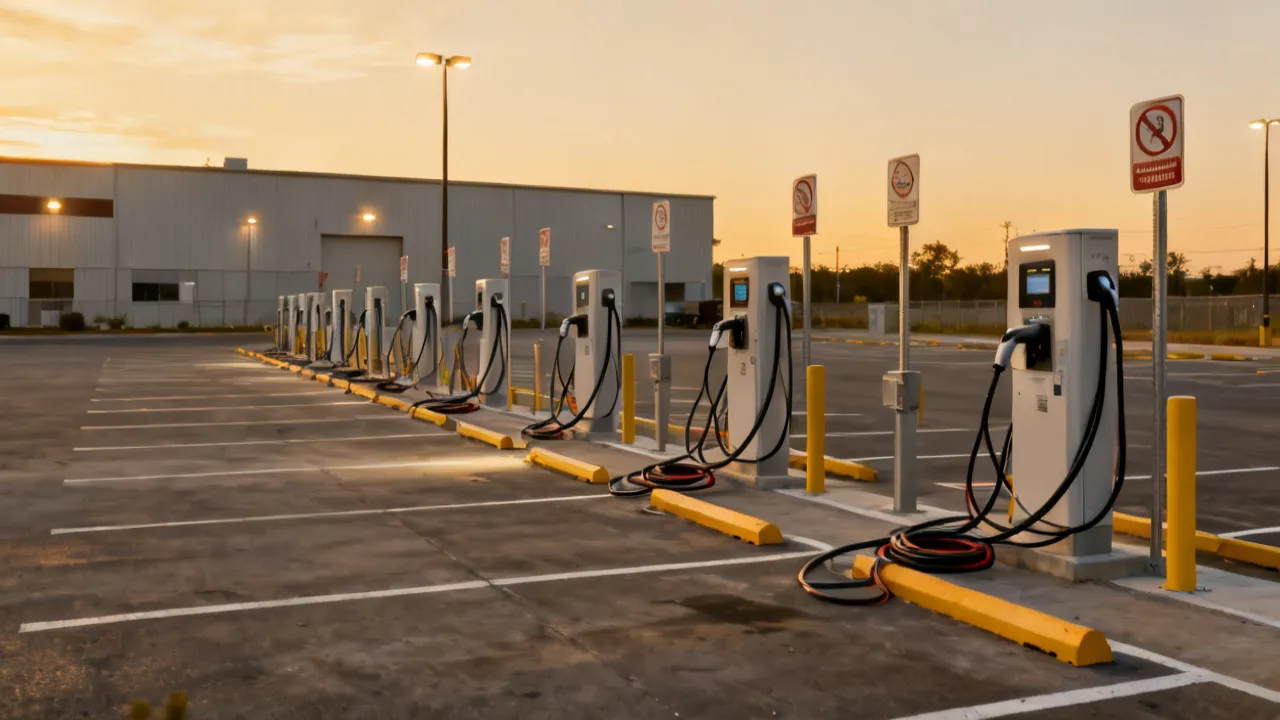
Commercial Electric Car Charging Points Installation Guide
This guide explains how Commercial Electric Car Charging Points Installation projects are planned, assessed, and delivered for reliable daily uptime. It reviews key background concepts—site surveys, power supply design, safety compliance, and contractor selection—so organisations can compare solutions objectively. You’ll also find a practical requirements overview and FAQs to support commissioning decisions.
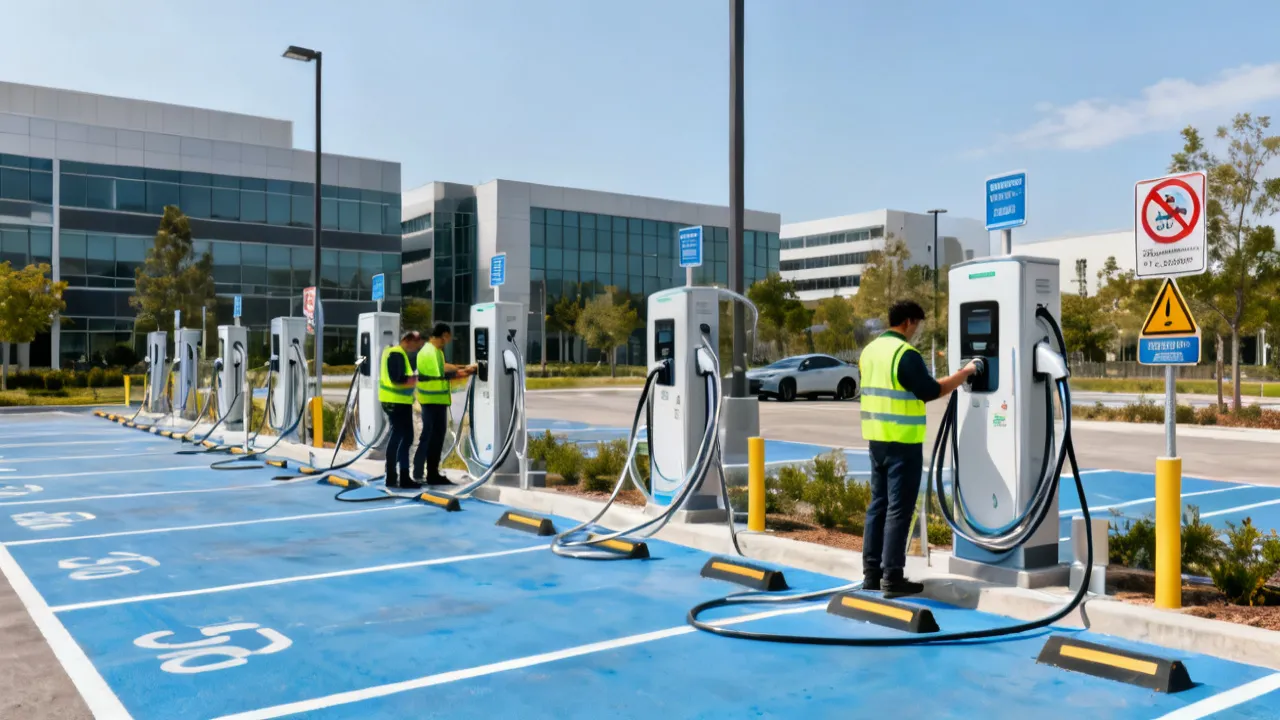
Commercial EV Charging Points: Installation Guide
This guide explains Commercial Electric Car Charging Points Installation, covering site planning, electrical design, procurement, permitting, grid connection, and commissioning. It provides objective background on chargers, standards, and risk controls, then outlines practical requirements through comparisons, a step-by-step approach, and FAQs—helping property owners and fleet managers plan upgrades with confidence.
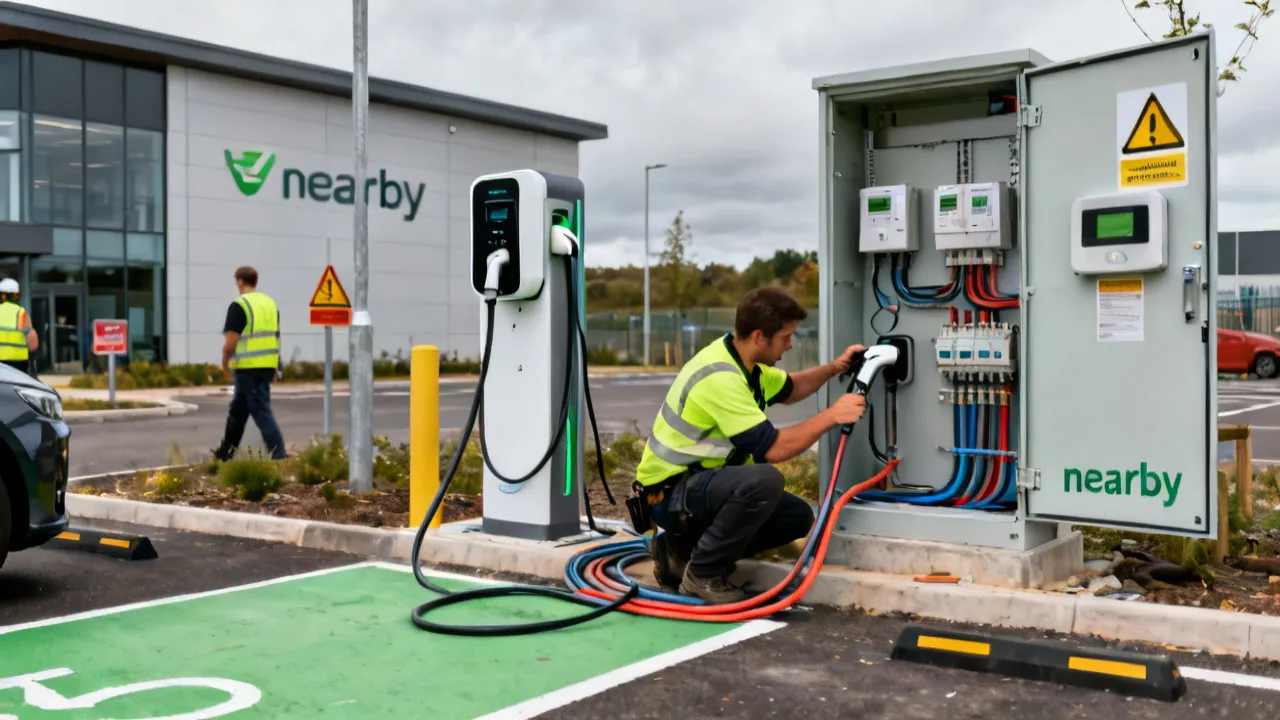
Commercial EV Charging Installation: Expert Guide
This guide explains Commercial Electric Car Charging Points Installation, from site assessment and grid connection to charger selection, civil works, compliance, and ongoing service. It reviews what matters for operators and fleet managers—power delivery, safety, uptime, and documentation—then adds a comparison table, a step-by-step install workflow, and key conditions to help you plan near reliable outcomes.
Commercial EV Charging Installation: Expert Guide and Costs
This guide explains Commercial Electric Car Charging Points Installation—from planning and compliant electrical design to contractor selection, expected costs, and operational readiness. It provides objective background on charging infrastructure, grid considerations, site surveys, and safety practices, helping businesses in nearby areas choose suitable equipment and avoid common installation mistakes.
Commercial Electric Car Charging Points: Installation Guide
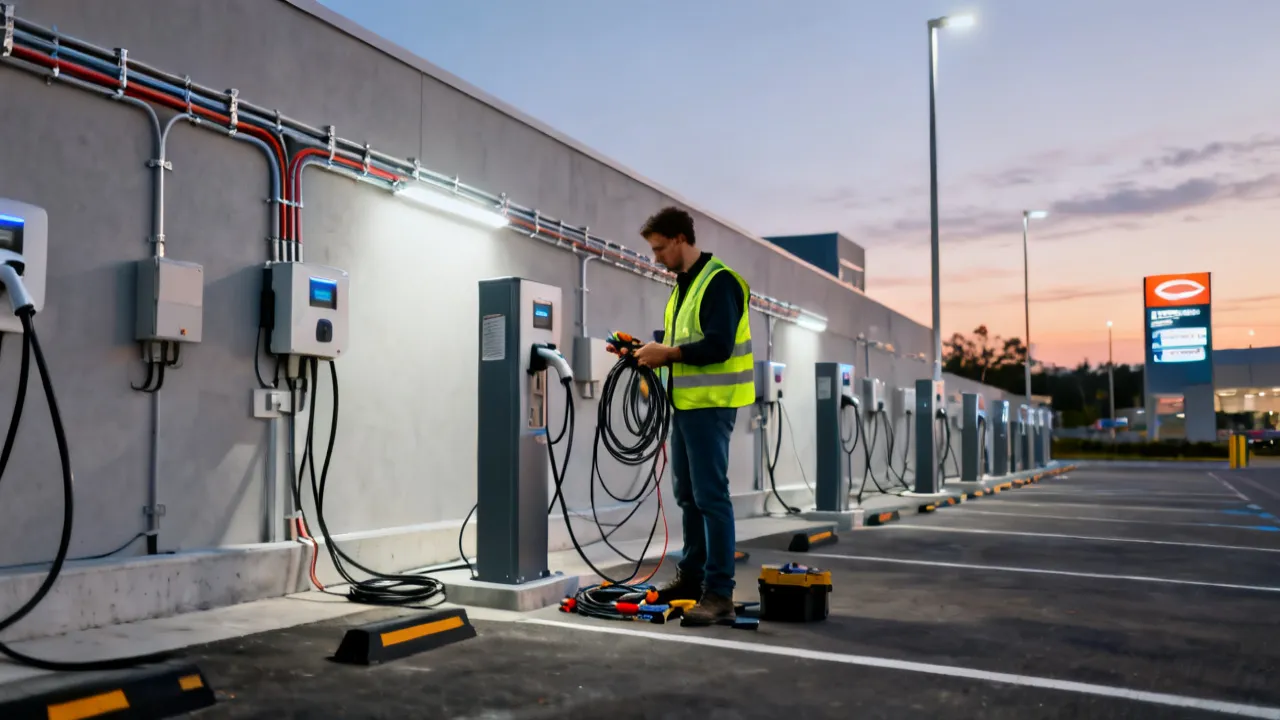
This guide explains Commercial Electric Car Charging Points Installation, from site assessment to power supply, safety compliance, and commissioning. It provides objective context on charging standards, typical infrastructure layers, and procurement considerations. Readers will gain a practical, expert view of what to plan before work starts, what to verify during installation, and how to reduce operational risk over the charging network’s lifecycle.
How to Install Commercial Electric Car Charging Points
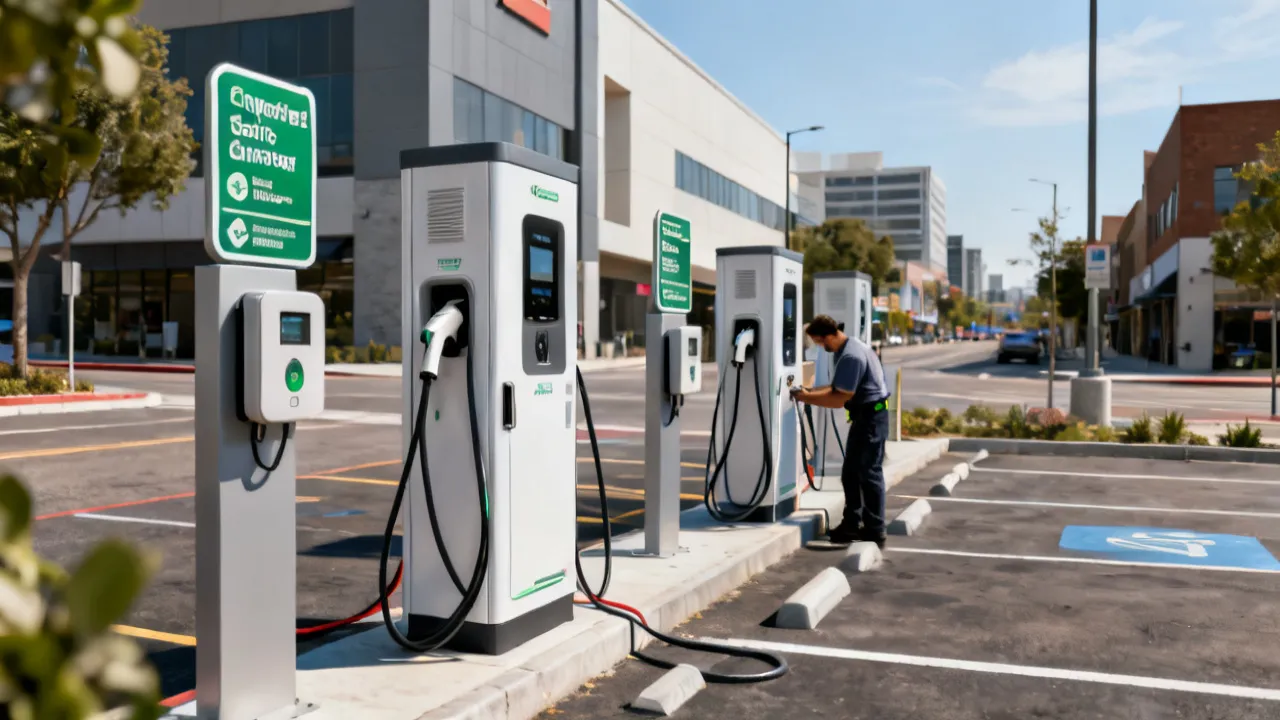
This guide explains how Commercial Electric Car Charging Points Installation works for businesses, from planning and site surveys to electrical design, permitting, commissioning, and ongoing maintenance. It objectively outlines what “commercial charging points” typically include, why hardware choices matter, and which operational requirements drive total costs and timelines.
