This guide explains how to evaluate a Poly Mailer for product protection, shipping efficiency, branding, sustainability, and regulatory fit. Poly Mailers are lightweight plastic shipping envelopes commonly used for apparel, textiles, documents, and other non-fragile goods. Their construction, seal design, dimensions, recycled content, recyclability, and supplier controls all influence performance and environmental considerations. The article also compares key alternatives and outlines practical purchasing requirements.
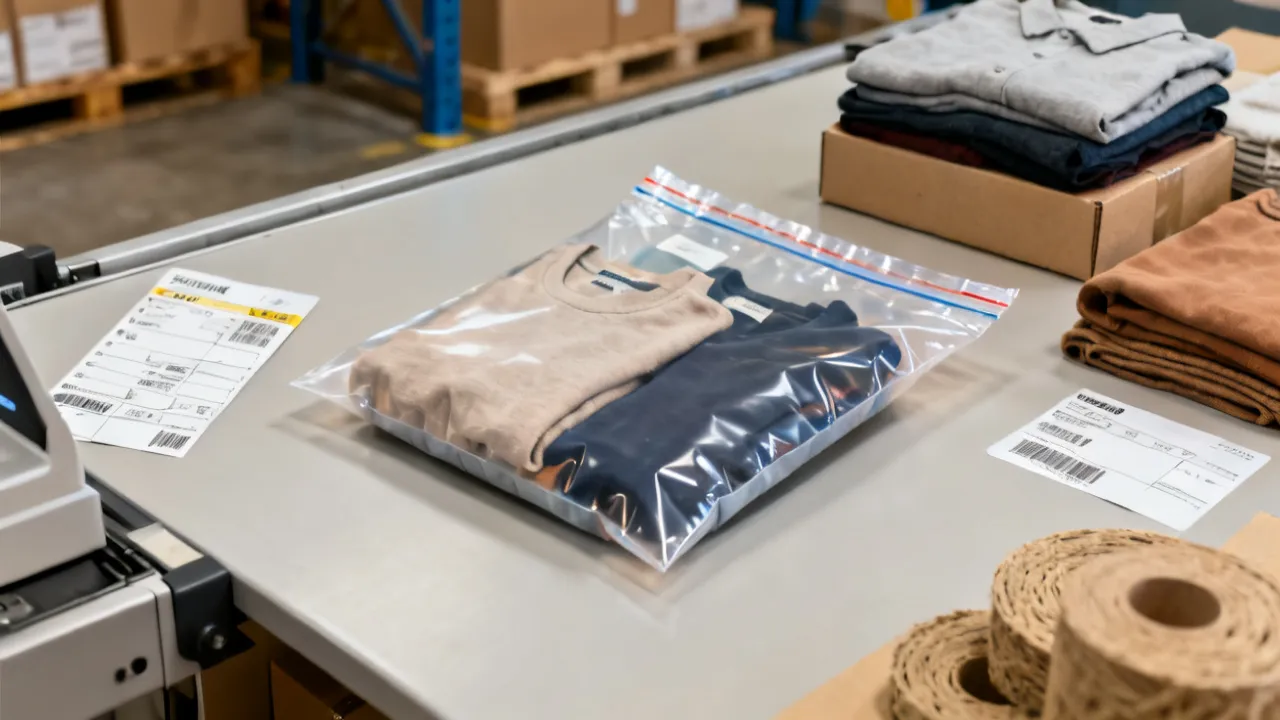
A Poly Mailer is a lightweight, flexible shipping envelope made primarily from polyethylene film. It is widely used by retailers, fulfillment centers, subscription businesses, clothing brands, publishers, and individual sellers because it can protect suitable products while occupying less space than a rigid carton. The top choice, however, is not simply the thinnest or least expensive envelope. It must match the product, distribution environment, sealing process, labeling requirements, return process, and the company’s sustainability policy.
From an industry expert’s perspective, purchasing decisions should begin with a packaging specification rather than a visual preference. The specification should identify the product’s dimensions, weight, fragility, moisture sensitivity, surface requirements, expected transit conditions, and desired end-of-life route. It should also identify how the package will be stored, packed, labeled, sorted, delivered, opened, and potentially returned. A Poly Mailer can perform very well for soft goods, but it is not a universal substitute for a box or a padded protective package.
The very important evaluation points are:
Choosing packaging through these criteria creates a more reliable balance among protection, cost control, customer experience, and environmental responsibility. It also gives a business a defensible reason for selecting one type of mailer over another. This is especially useful when procurement, operations, marketing, and sustainability teams have different priorities.
A Poly Mailer is a flexible envelope generally produced from polyethylene film. Common structures include low-density polyethylene, linear low-density polyethylene, high-density polyethylene, or blends selected for specific strength and processing characteristics. The envelope may include a pressure-sensitive adhesive strip, a resealable flap, a tear-open strip, a second adhesive strip for returns, or an internal layer designed to improve opacity.
Unlike a corrugated shipping carton, a standard Poly Mailer does not create a rigid protective shell. Its primary functions are containment, moisture resistance, surface protection, and efficient handling. It can help prevent dirt, light rain, and minor scuffing from affecting the enclosed item. It should not be expected to absorb major impacts or protect delicate products from compression unless it is combined with internal cushioning or a more robust outer package.
Typical applications include:
Some mailers include air bubbles or foam layers. These padded variants provide more cushioning than a plain film envelope, but they should still be assessed against the product’s actual drop, compression, and abrasion risks. A padded envelope may protect a small accessory or a book more effectively than a plain mailer, but it does not automatically provide the same protection as a purpose-designed carton with internal structure.
The distinction between containment and protection is important. A mailer may keep several items together and prevent exposure to dust or moisture, while doing little to stop crushing or impact. When a product has sharp corners, exposed hardware, a rigid edge, or a surface that can puncture film, the packaging specification should include an inner sleeve, tissue, protective wrap, or carton insert.
The strongest business case for a Poly Mailer is often operational efficiency. Flexible film can conform to soft merchandise, allowing a package to occupy less unused space than a box. Lower package volume may simplify storage and reduce the need for packing materials such as void fill, carton tape, and additional protective layers. The actual benefit depends on product geometry, carrier pricing rules, and warehouse practices.
A Poly Mailer can also support a fast packing workflow. A worker can place a folded item inside, remove the release liner, seal the flap, apply a shipping label, and move the package to the outbound area. This process is especially practical when product dimensions are predictable and the packaging design uses a consistent opening and closure system. High-volume fulfillment operations may save considerable labor when a mailer eliminates box forming, tape cutting, and void-fill decisions.
Other potential advantages include:
These advantages should be measured rather than assumed. A mailer that fails at the seal or tears during sorting can create more expense through replacement shipments, customer service work, product damage, and reputational harm. Packaging efficiency is therefore a systems question, not merely a purchase-price question.
Carrier pricing should also be considered. Some carriers calculate charges using actual weight, while others apply dimensional or minimum package rules. Because a mailer generally has a low tare weight and can conform closely to soft products, it may provide an advantage in certain shipping profiles. That advantage disappears if the package must be oversized to accommodate the product or if additional inner protection is required.
Film thickness is often expressed in microns or mils. A thicker film may offer greater resistance to puncture and tearing, but thickness alone does not determine quality. Resin selection, film orientation, sealing temperature, manufacturing consistency, and seam design also influence performance. Two mailers with similar thickness can behave differently under the same stress.
Buyers should request a declared thickness range rather than relying on a single nominal figure. A supplier should also explain how thickness is measured and whether the stated value applies to the main film, a reinforced section, or an average across the package. Large variations in thickness can affect both appearance and mechanical performance.
Thinner film is not always the more sustainable option if it produces a higher rate of damaged orders. The correct goal is material efficiency: using no more material than the product requires while maintaining dependable containment and delivery performance. This may involve testing several gauges rather than assuming that the minimum available specification is appropriate.
Side and bottom seams are critical because they carry the load of the enclosed product. Strong seams should remain intact when the mailer is filled, handled, stacked, and exposed to ordinary transit movement. Buyers can ask for seam-strength test results, sample evaluations, or a documented quality-control process.
It is also important to examine how the mailer is used in practice. Overfilling can place stress on the seam even when the product is within the stated weight limit. A supplier’s recommendations should be considered alongside the packer’s loading method and the shape of the merchandise. A heavy item with a concentrated edge can create more stress than a larger but evenly distributed textile order.
The adhesive strip should create a continuous closure across the intended sealing area. Poor adhesion may result from contamination, dust, cold storage, uneven pressure, or an unsuitable release liner. A reliable design should be easy for workers to activate and difficult to open accidentally during transit.
For returnable packaging, a second adhesive strip can be valuable. A tear strip may allow the original package to be opened without scissors, while the secondary closure gives the customer a practical way to send the item back. The return feature should be tested with real products because folded clothing and packaged accessories can create different stresses inside the mailer.
Adhesive activation is partly an operational issue. Workers should not peel the release liner too early, allow the adhesive to contact dust or fabric, or seal over a product that extends into the flap area. If the packaging is used in a cold warehouse, the supplier should provide guidance on the minimum application temperature and the time required for the bond to develop.
Opaque film is commonly used when the product should not be visible during handling. Opacity can be improved through color, film structure, or additives. For garments and personal goods, privacy may be a meaningful customer-experience consideration. However, darker colors and certain additives can affect recycling claims or printing requirements, so these characteristics should be reviewed with the supplier.
Privacy can also reduce the temptation for unauthorized opening during transit. It does not replace tamper-evident construction, but a less transparent exterior may provide an additional layer of discretion. Businesses selling personal apparel, documents, or subscription products should consider whether the exterior reveals too much about the contents.
Handle holes, tear strips, tamper-evident closures, gussets, and reinforced edges may be useful for specific workflows. Each feature adds design complexity and can affect material use. A handle hole, for example, may improve manual handling but can also become a stress point if the package is heavy. Features should be selected based on an identified operational need rather than added solely for appearance.
Gussets may help accommodate bulky or irregular soft products, but they can change the package’s behavior on conveyors and may create additional folds around the label area. Tamper-evident seals may be appropriate for products where evidence of opening is important, but they should be evaluated for customer convenience and return handling.
Size selection is one of the very practical determinants of Poly Mailer performance. The internal dimensions should accommodate the product without excessive compression or loose movement. To estimate the required size, measure the item in its intended shipping condition, including any tissue paper, retail packaging, folded inserts, or protective layer.
Allow enough room for the opening flap and sealing area. A common mistake is to compare the mailer’s external dimensions with the product dimensions. The usable internal area may be smaller because of seams, the flap, gussets, or the shape of the envelope. Suppliers should identify whether listed dimensions are external, internal, or usable dimensions.
Businesses can organize sizes into a small range of standard formats:
| Packaging profile | Typical product examples | Primary selection concern |
|---|---|---|
| Small flexible mailer | Accessories, documents, light textiles | Preventing excess movement and overpacking |
| Medium apparel mailer | Shirts, trousers, scarves, folded garments | Balancing usable space with seam protection |
| Large apparel mailer | Jackets, bedding, multiple clothing items | Maintaining closure strength under greater volume |
| Padded mailer | Books, small accessories, selected semi-fragile items | Matching cushioning to impact and abrasion risk |
| Gusseted mailer | Bulky textiles and soft merchandise | Managing increased volume without overstressing seams |
The table is a planning framework rather than a substitute for dimensional testing. Product categories vary substantially. A thick sweatshirt can require more volume than several thin shirts, while a rigid accessory may need a different shape even when its weight is low.
Overly large mailers may use additional film and create a loose package that is harder to label and sort. Overly small mailers may stress the adhesive flap, distort the contents, or cause the package to burst. A practical sampling exercise using the largest and smallest products in each category can reveal sizing problems before a purchase is finalized.
When measuring, businesses should also account for the product’s orientation. A garment folded into a compact rectangle may fit one mailer size, while the same garment rolled or placed inside a retail box may require another. If packers use different folding methods, the specification should be based on the largest normal packed condition rather than the idealized smallest version.
Plain mailers are generally suited to businesses prioritizing a simple presentation and straightforward packing process. They may be white, gray, black, or another standard color. The absence of custom graphics can reduce design complexity and support a consistent, understated appearance.
Plain mailers are also useful during product launches, seasonal changes, or periods when inventory demand is uncertain. A business does not need to commit to a large quantity of packaging printed with a specific campaign or message. The trade-off is that the package provides less visible branding and may require separate inserts for customer communication.
Printed mailers can extend a brand’s visual identity beyond the product itself. A logo, color system, handling message, or return instruction can be incorporated into the film. Professional artwork should account for film color, ink adhesion, barcode contrast, print tolerances, and the placement of shipping labels.
Branding should not interfere with carrier labels or operational markings. A shipping label needs sufficient contrast and a smooth surface for reliable scanning. Decorative artwork should therefore be planned around the label area, closure, seam, and any mandatory handling information.
Before production, the buyer should approve a physical proof or production sample rather than relying exclusively on a digital rendering. Flexible film can produce different color results from paper, and the final appearance may change when the mailer is folded or filled. Print durability should also be checked after rubbing, bending, and ordinary handling.
Padded mailers include an internal cushioning layer, often an air-bubble or foam structure. They are appropriate for products that need some protection from abrasion and minor impact but do not require the full rigidity of a carton. The cushioning layer may complicate recycling because it can combine different materials. Buyers should request exact material composition and disposal guidance rather than making assumptions from the product’s appearance.
The thickness and pattern of the cushioning layer affect performance. A small bubble structure may protect surfaces from scuffing, while a larger structure may provide greater separation from minor impacts. Neither type should be treated as a guarantee against crushing. The product’s own packaging, especially for books, cosmetics, and small electronics, should be included in the test.
A returnable design typically includes two adhesive strips and a tear-open mechanism. It can improve the customer’s return experience by allowing one package to serve both outbound and reverse logistics. The design should be tested for repeated handling, label removal, closure integrity, and the possibility that a customer will repack the product less neatly than the original warehouse worker.
Returnable packaging can reduce the need for customers to find another envelope or purchase a replacement package. Clear instructions should explain which strip to use, where to place the return label, and how to remove or cover the original shipping information. A package that is technically reusable but confusing to open may still create avoidable service contacts.
Environmental claims require precise language. Recycled content refers to material incorporated into the product that originated from recovered material. Post-consumer recycled content is sourced from products used by consumers and then collected for reprocessing. Post-industrial or pre-consumer material is generated during manufacturing or conversion and reintroduced into production. These categories should be distinguished in supplier documentation.
Recycled-content film can have different visual and performance characteristics from virgin resin. The appearance may be less uniform, and the supplier may need to manage odor, color, contamination, or melt-flow variation. These factors do not automatically make recycled material unsuitable, but they should be considered when the package requires high opacity, precise printing, or demanding seal performance.
Recyclability describes whether a package can be collected, sorted, processed, and used as feedstock within a relevant recycling system. A package may be technically recyclable in a controlled process while not being accepted through every local collection program. The practical answer depends on local infrastructure, contamination levels, package composition, and the availability of an appropriate collection route.
Polyethylene film packaging is sometimes handled through dedicated film-recycling channels rather than curbside systems. Acceptance rules vary by jurisdiction and can change over time. A responsible article or product label should direct users to check local guidance instead of making a universal disposal promise.
Compostability is a separate claim and should not be inferred from the use of recycled content or from a plant-based additive. A compostable package generally needs to meet recognized technical requirements and may require an industrial composting environment. Relevant standards can include EN 13432 or ASTM D6400, depending on the claim and market. Certification, test scope, and labeling conditions should be verified before a business uses such terminology.
When evaluating a sustainability claim, buyers should ask:
Environmental communication should be specific, qualified, and supported by evidence. The United States Federal Trade Commission’s Green Guides provide guidance on avoiding broad or misleading environmental marketing claims, while ISO 18606 addresses packaging and the organic recycling of packaging materials in relevant contexts. These references do not eliminate the need to review local law and current program requirements.
A business should also consider product protection when evaluating environmental performance. If an inadequate mailer causes a product to be discarded and reshipped, the additional product, transport, labor, and packaging impacts may outweigh the material savings from using a lighter envelope. Environmental decision-making should therefore consider the full distribution system rather than focusing on package weight alone.
Samples should be tested with actual products and realistic handling conditions. Laboratory data is useful, but field-oriented testing often reveals operational problems that a specification sheet cannot show. The test plan should reflect the company’s distribution route, packing staff, storage conditions, customer return process, and likely carrier handling.
Record the product’s packed dimensions, weight, edges, surface texture, and any protruding components. Identify the heaviest standard order and the order most likely to puncture or stretch the packaging. If several product categories will use the same mailer, test each category separately.
Check film uniformity, print quality, seam appearance, adhesive coverage, flap dimensions, tear-strip placement, and internal cleanliness. Look for wrinkles, weak corners, inconsistent cuts, or areas where the adhesive is exposed prematurely. Examine whether the opening is wide enough for efficient loading without excessive stretching.
Ask the people who will pack the orders to use the sample. Observe whether the product enters smoothly, whether the flap folds correctly, and whether the closure requires excessive force. Record the time required and note any tendency to trap fabric, labels, or inserts in the adhesive.
It is useful to conduct trials with both experienced and new packers. A design that works only when handled by a highly skilled operator may produce inconsistent results in a growing fulfillment operation. The test should also include peak-volume conditions, because hurried packing often exposes weaknesses that are not visible during a slow demonstration.
Filled samples can be subjected to controlled drops, compression, abrasion, and repeated manual handling. The objective is not to create a universal performance score but to understand whether the package is appropriate for the company’s distribution conditions. If a formal testing program is required, the business should consult a packaging laboratory or qualified testing professional.
Samples should be inspected after each stress event. A small surface mark may be acceptable, while a partially opened seam, exposed product, or damaged label area may indicate an unacceptable risk. Test results should be recorded with the product configuration, mailer size, film specification, and closure method so that comparisons remain meaningful.
Adhesive performance can change with temperature, humidity, dust, and storage time. Keep samples under the conditions expected in the warehouse, then inspect the seal after packing. Cold environments may influence pressure-sensitive adhesive behavior, while dusty packing areas can reduce contact quality.
For a returnable Poly Mailer, send a package through a representative outbound process, open it using the tear strip, and reseal it. Evaluate whether the second adhesive strip is easy to use and whether the return label can be placed without covering important information. Test the package after it has been opened and resealed more than once if customers may make mistakes during the return process.
Once the sample is accepted, document the material, dimensions, thickness, closure type, print details, tolerances, testing expectations, packaging quantity, storage recommendations, and inspection criteria. This document helps prevent a later shipment from changing an important characteristic without internal approval.
Supplier selection should cover more than quotation price. The buyer should assess whether the supplier can maintain consistent film quality, meet the required delivery schedule, and provide transparent information about material composition. A supplier that communicates clearly about tolerances and limitations is often more valuable than one offering an attractive initial price without technical detail.
Important supplier questions include:
A purchasing contract or purchase order should identify the approved specification and define how changes are communicated. This is particularly important for custom printed packaging, where a small change in film color can affect the appearance of the entire customer experience.
Buyers should also distinguish between a manufacturer, converter, distributor, and sourcing agent. A distributor may provide convenience and inventory access, while a manufacturer may offer more control over customization. Neither model is automatically superior. The correct choice depends on order volume, required responsiveness, technical complexity, and the buyer’s ability to manage inventory.
Supplier audits may be appropriate for high-volume or regulated applications. An audit can examine incoming resin controls, film extrusion, printing, adhesive application, seam formation, inspection records, and finished-goods storage. Smaller businesses may not need a formal site audit, but they can still request a quality questionnaire, certificates, sample reports, and evidence of batch control.
The quoted unit price is only one part of the total packaging cost. A comprehensive analysis should include purchase price, freight, warehousing, labor, labels, sealing equipment, damage rates, returns, disposal requirements, and inventory obsolescence. Custom printing may involve artwork preparation, cylinders or plates, setup charges, and minimum production quantities.
A useful internal calculation is the cost per successfully delivered order. If a low-priced mailer produces more sealing failures or product damage, its apparent savings may disappear. Conversely, a more robust mailer may lower total cost if it reduces rework and customer complaints. The comparison should use actual operational records whenever possible.
| Cost category | Questions to examine | Why it matters |
|---|---|---|
| Purchase cost | What is the price at the required quantity and specification? | Establishes the direct material expense |
| Freight and storage | How much space and transport capacity do the mailers require? | Flexible packaging may affect warehouse density and inbound logistics |
| Labor | How quickly can workers load, seal, and label the package? | Small workflow differences can accumulate at scale |
| Failure cost | How often do seals, seams, or films fail in normal handling? | Packaging failures can generate replacement and service expenses |
| Returns | Can the same package support an efficient return process? | A second closure may reduce additional return packaging needs |
| End-of-life management | What collection instructions and materials are required? | Disposal expectations affect customer communication and corporate reporting |
| Inventory risk | What happens if demand changes or branding becomes outdated? | Large custom orders can create obsolete stock |
Price comparisons should always be made on an equivalent basis. A padded, printed, dual-closure mailer is not directly comparable with a plain single-strip envelope. The dimensions, film gauge, material composition, print coverage, closure, order quantity, and delivery terms should all be aligned before drawing a conclusion.
The decision between a Poly Mailer and a corrugated carton depends primarily on product protection and process requirements. A carton provides rigidity, stackability, and better protection for many fragile or irregularly shaped goods. It can also support internal partitions, cushioning, and presentation structures.
A mailer is often more suitable for soft, flexible, and non-breakable goods. It may reduce unused space and simplify packing, especially when products are already contained in retail packaging. However, the mailer may not protect sharp corners, glass, electronics, ceramics, or products vulnerable to compression.
| Factor | Poly Mailer | Corrugated carton |
|---|---|---|
| Rigidity | Flexible and conforming | Rigid and stackable |
| Moisture surface protection | Typically strong against surface moisture | May require additional protection in wet conditions |
| Impact protection | Limited unless padded or combined with cushioning | Generally better when properly designed and filled |
| Top product fit | Soft, flexible, and non-fragile products | Fragile, rigid, heavy, or irregular products |
| Returns | Can include a second adhesive closure | May need tape or a dedicated return feature |
| Labeling | Requires a suitable smooth label area | Usually offers broad flat panels |
A hybrid packaging strategy is often more practical than choosing a single format for every order. A retailer may use standard mailers for garments, padded versions for selected accessories, and cartons for fragile products. This approach reduces the risk of forcing an unsuitable package onto a product simply to simplify purchasing.
The shipping environment may also influence the decision. A carton can provide better stacking behavior in distribution centers, while a mailer may move efficiently through automated equipment designed for flexible parcels. Businesses should observe how both formats behave in their carrier’s network before making a broad conversion.
Paper-based mailers appeal to businesses seeking a fiber-based packaging format. They can provide a different tactile experience and may align with existing paper collection systems. Their performance depends on paper weight, coatings, seam construction, moisture exposure, and whether the enclosed product needs flexible or rigid protection.
Polyethylene mailers generally provide strong moisture resistance and high flexibility. Paper mailers may be more vulnerable to tearing or saturation in wet conditions unless specially designed. On the other hand, a paper-based option may fit a business’s material strategy or local recovery infrastructure more closely.
The comparison should not be reduced to the idea that one material is always environmentally superior. A responsible evaluation considers material quantity, production, transport, product protection, reuse potential, recycling or recovery, and the consequences of damage. Life-cycle assessments can inform the decision, but results depend on system boundaries, assumptions, local energy sources, transport distances, and end-of-life scenarios.
Businesses should also consider whether the paper-based format requires coatings, plastic films, or mixed-material laminations. A package that appears paper-based may not follow the same recycling pathway as an uncoated fiber package. Similarly, a Poly Mailer with a simple polyethylene structure may have a different recovery route from a padded, laminated, or heavily printed design.
Even a well-designed Poly Mailer can underperform if the packing process is poorly controlled. Storage areas should protect the film from extreme heat, direct sunlight, sharp objects, excessive dust, and conditions that may degrade adhesive performance. Packages should remain in their original protective cartons or bundles until needed where practical.
Packing stations should have a clean surface and a layout that prevents the adhesive strip from contacting tools, clothing, labels, or debris before sealing. Workers should be trained to place the product fully inside the envelope, remove excess air when appropriate, align the flap, and apply consistent pressure across the seal.
Common workflow improvements include:
Training should emphasize that the package must be sealed along the intended adhesive zone. Pressing only the center of the flap may leave the edges unsecured. Conversely, forcing a filled package beyond its practical capacity may cause the flap to spring open or the seam to deform.
Warehouse managers should periodically inspect completed packages. A short audit can check correct size selection, product placement, seal coverage, label readability, and the absence of protruding items. If a recurring issue is discovered, photographs and sample packages can help explain the problem during refresher training.
Packaging is one of the few physical brand interactions that reaches nearly every e-commerce customer. A clean, well-sealed mailer can signal order quality before the product is opened. Custom printing may be valuable for a fashion label, subscription service, or campaign-based retailer, but design decisions should support operational reliability.
Good artwork normally includes a clear hierarchy, sufficient contrast, and a reserved location for the shipping label. Small text can become difficult to read on flexible film, especially when the package bends. Instructions such as “open here” or return guidance should be placed where the customer can see them without covering the closure.
Brand claims should also be reviewed carefully. Words suggesting environmental superiority should be specific and supported by documentation. If the package contains recycled material, the label should identify the claim accurately and avoid implying that the entire package has a different end-of-life route than it actually does.
The unboxing experience should be considered without compromising practical performance. A customer may appreciate an attractive exterior, an easy-open strip, and clear return instructions, but these features should not create unnecessary layers, difficult seals, or confusing disposal directions. The best customer experience usually combines simple opening, intact contents, accurate labeling, and a clear path for returns.
Packaging requirements vary by country, state, province, municipality, carrier, and product category. A business shipping internationally should review the rules of the destination market rather than assuming that domestic packaging statements apply everywhere.
Important areas for review may include:
Packaging intended to contact food, medicine, or other regulated products may require additional compliance evidence. A standard shipping envelope should not be described as suitable for direct product contact unless the manufacturer has provided the necessary documentation.
Businesses should maintain a file containing the supplier specification, material declaration, test reports, artwork approval, purchase records, and relevant claims substantiation. This documentation supports internal quality control and allows a company to respond more effectively if a customer, auditor, retailer, or regulator asks how the packaging was produced or labeled.
Shipping labels should be applied to a clean, reasonably flat portion of the mailer. Deep wrinkles, seams, folds, decorative patterns, or low-contrast surfaces can interfere with barcode scanning. A label that adheres poorly may detach during sorting, so the selected film and label adhesive should be checked together rather than separately.
A low unit price can be appealing, but it may conceal lower film consistency, weak adhesive, larger tolerances, or higher minimum quantities. Total cost should include handling and failure consequences.
External measurements may not represent the space available for the product. Always confirm internal dimensions and test the actual load.
Soft goods and fragile goods have different protection requirements. A single packaging format may create unnecessary material use for some products and inadequate protection for others.
Terms such as recyclable, compostable, or environmentally friendly need context and evidence. Claims should reflect the package’s complete structure and the disposal systems available to the intended audience.
A return strip that works in a warehouse may be difficult for a customer to use. Return packaging should be tested under realistic conditions, including a less precise repacking process.
Changes in resin, adhesive, film gauge, print process, or manufacturing location can influence performance. Written change-notification requirements help preserve consistency.
Buying a suitable mailer but storing it in direct heat, high humidity, or a dusty area can reduce adhesive reliability. Storage should be treated as part of the packaging system.
Rigid corners, buckles, zippers, and hardware can puncture or abrade film during transit. A product assessment should consider shape and surface texture, not weight and dimensions alone.
An effective selection process can be organized into five questions:
This framework keeps the decision connected to business outcomes. A Poly Mailer should be judged not only by its appearance or purchase price but by how well it performs across the full distribution cycle.
After implementation, the business should review performance at regular intervals. Useful measures include the percentage of packages requiring repacking, customer reports of damaged or wet contents, adhesive failures, average packing time, packaging cost per order, and return completion rates. Comparing these measures across sizes and product categories can reveal whether a particular mailer is being used outside its intended application.
Before placing an order, a business should confirm the following requirements:
These requirements do not need to be complex. A concise technical specification and a documented sample approval can prevent many avoidable problems. The key is to make assumptions visible before production begins. If the packaging will serve multiple regions, the specification should also identify any differences in labeling or disposal instructions required for each market.
Soft, flexible, and non-fragile products are usually the top candidates. Apparel, textiles, lightweight accessories, and selected printed materials commonly fit this format. Products made of glass, ceramics, or other breakable materials generally need a carton or a more protective packaging system.
Polyethylene film is typically resistant to surface moisture, but a mailer should not automatically be described as waterproof in every condition. Water can enter through an imperfect seal, a tear, a puncture, or an opening around the flap. Performance should be evaluated against the expected exposure.
There is no single correct thickness for every application. The appropriate gauge depends on product weight, shape, edges, handling conditions, and desired puncture resistance. Buyers should compare complete specifications and sample performance rather than selecting thickness in isolation.
Some polyethylene mailers may be accepted through dedicated film-recycling programs, but acceptance varies by location and package construction. Padded or multilayer designs may have different requirements. Customers should follow local collection guidance and avoid placing film packaging in systems that do not accept it.
No. Recycled content describes what was used to make the package. Recyclability concerns whether the package can be collected and processed into a suitable recovered material. A mailer can contain recycled material and still require a specific collection route.
Compostable mailers are not suitable by default. Their performance, certification, storage conditions, and end-of-life requirements must match the application. A claim related to industrial composting does not necessarily mean the package will break down in a home composting system or in ordinary soil.
It can replace a box for suitable non-fragile products, but not for every shipment. The decision depends on the level of impact, compression, puncture, and shape protection required. A product that needs internal cushioning or rigid support should remain in a carton or use a tested hybrid design.
Use the correct size, avoid overfilling, keep adhesive areas clean, train packing staff, inspect seals, and purchase against an approved specification. Recording failure patterns helps identify whether the cause is product shape, mailer design, storage conditions, or packing technique.
They may involve artwork, setup, minimum quantity, and color-control costs in addition to the film itself. The financial impact depends on print coverage, order volume, production method, and supplier terms. A quotation should separate recurring unit cost from one-time setup charges.
The sheet should identify material composition, dimensions, thickness or gauge, tolerances, closure type, adhesive details, print requirements, recycled-content information where applicable, packaging quantity, storage recommendations, and quality-testing expectations. Batch identification and change-notification procedures are also valuable.
Store them in a clean, dry area away from direct sunlight, sharp objects, excessive heat, and conditions that may affect the adhesive. Keep bundles organized so that different sizes and specifications are not mixed. Follow the supplier’s storage recommendations when they are more specific.
Yes, if it has a suitable tear strip and a second adhesive closure. The design should be tested with actual products and realistic customer handling. The return label area, seal strength, and instructions should remain clear after the original package is opened.
Opaque mailers are often preferred for privacy, branding, and protection from light. Clear mailers may be useful when product visibility is operationally important, but they can reveal the contents and may provide a different appearance under handling. The choice should reflect customer expectations, product sensitivity, and the desired brand presentation.
A specification should be reviewed whenever the product, supplier, shipping route, labeling system, or sustainability claim changes. Even without a major change, an annual review can identify recurring failures, new disposal guidance, or opportunities to reduce material while maintaining performance.
A Poly Mailer is a practical shipping format when its flexibility, moisture resistance, storage advantages, and streamlined packing process match the product and distribution system. Its value depends on more than film appearance or unit price. Dimensions, gauge, seams, adhesive, labeling, returns, supplier consistency, and environmental documentation all contribute to the final result.
The very reliable approach is to define the product requirements first, test representative samples, compare total operating costs, and document the approved specification. Businesses should also communicate environmental information with precision and direct customers toward the appropriate local disposal route. When selected and managed systematically, a Poly Mailer can support efficient fulfillment while maintaining product protection and a professional delivery experience.
Striking the Perfect Balance: Navigating Premiums and Out-of-Pocket Expenses in Senior Insurance Plans

Explore the Tranquil Bliss of Idyllic Rural Retreats

How to Make Lasting Memories at Disneyland Attractions

Affordable Phones and Plans for Seniors

Affordable Full Mouth Dental Implants Near You

Unlock the Top Kept Secrets to Finding Your Ideal Dentist for Flawless Dental Implant Results!

Discovering Springdale Estates

Unveiling RS Sul Telecom Services

The Guide to Car Trading


Understanding Proportional Valves
Proportional valves are hydraulic components vital for controlling fluid flow and pressure with high precision in various industrial applications. Their importance in automation and manufacturing settings stems from their ability to offer variable output in response to input signals, greatly enhancing system efficiency and performance.

Understanding Rexroth Valve Systems
Rexroth Valves are quintessential components in various industrial applications, known for their precision and reliability. These hydraulic, pneumatic, and electrohydraulic valves regulate fluid flow in machinery, ensuring optimal performance and safety. Understanding their functionality and benefits is crucial for industries seeking efficiency and sustainability in their operations.

Unveiling Thermo Fisher Chromatography
This article explores the pivotal role of Thermo Fisher Chromatography in modern analytical science. Chromatography is crucial for separating compounds within mixtures, making it indispensable in industries such as pharmaceuticals and environmental testing. Thermo Fisher Scientific stands out in this field for its innovative solutions, leading to improved accuracy and efficiency in research and development.

Understanding Corrosion Inhibitor Manufacturers
In today's industrial landscape, corrosion inhibitor manufacturers play a crucial role in safeguarding equipment and infrastructure against corrosive damage. These manufacturers provide specialized chemicals that prevent corrosion in various environments, including industries such as oil and gas, marine, and construction. Understanding their operations and offerings is essential for selecting the right supplier and maintaining asset longevity.

Analyzing Lm66100 Digikey Components
This article offers an in-depth analysis of the Lm66100 component available through Digikey, a renowned distributor of electronic components. The Lm66100, a load switch, is integral in industry applications, providing efficient power management. This piece explores its features, applications, and availability through Digikey, while offering a comprehensive guide for industry professionals seeking to optimize their electronic designs.

Leading Corrosion Inhibitor Suppliers
Corrosion inhibitor manufacturers play a crucial role in protecting materials from degradation. These companies specialize in creating chemical compounds that slow down or prevent the corrosive effects on various surfaces, especially metals. Understanding their production processes and solutions offered is vital for industries reliant on metal infrastructure.
