This guide explains goblin figures in folklore, fantasy writing, and modern media, focusing on credible characterization, ethics, and practical worldbuilding. Objectively, goblins appear across European-influenced tales as tricksters, scavengers, or threats, often reflecting social anxieties about outsiders. The article also reviews how creators can depict goblins with nuance and avoid stereotypes.
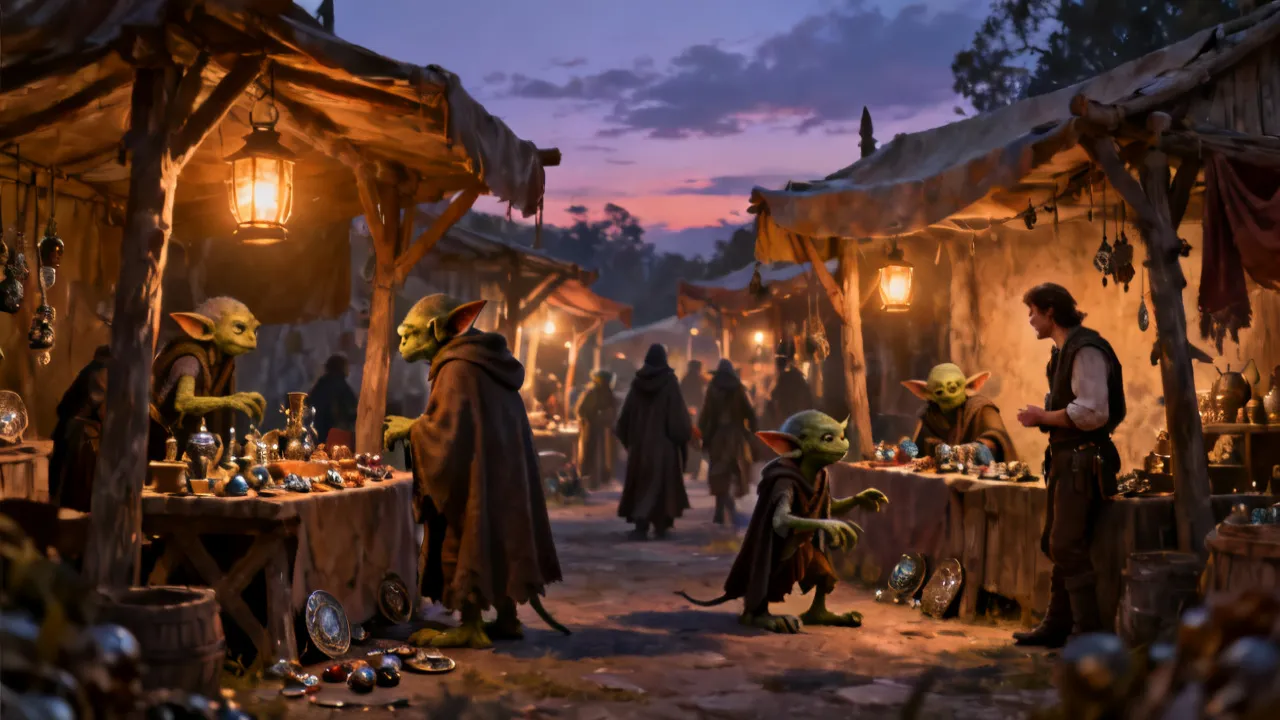
Goblins are among the very enduring “non-human” archetypes in folklore and fantasy, commonly shaped by centuries of storytelling. In professional worldbuilding, the goal is not to chase shock value, but to build a coherent social logic: what goblins value, how they communicate, how they bargain, and why they act the way they do—then keep those rules consistent across scenes, dialogue, and plot.
From an industry expert’s perspective (covering narrative design, franchise writing, and game content production), the very effective goblin portrayals balance recognizable traits—curiosity, opportunism, community survival—with grounded motivations that feel earned. This approach is especially important when goblins are used as playable characters, faction leaders, or recurring NPCs, because players and readers read “character intent” more quickly than “surface aesthetics.” They will forgive odd clothing or uncanny anatomy; they will not forgive motive whiplash or “random behavior” that contradicts what the story has previously taught them.
Consistency doesn’t mean rigidity. It means that every “new” behavior you show should connect to an underlying incentive, fear, cultural norm, or social consequence. The craft challenge is to create a goblin whose unpredictability is explainable. When a goblin lies, it should be because lying is a tactical option within their risk model. When a goblin shows tenderness, it should be because tenderness preserves group cohesion, increases status, fulfills debt obligations, or signals alliance. When a goblin chooses violence, it should still be legible as a policy decision rather than a writer’s mood.
In practice, that means you treat goblins not as a single character template but as a species-wide and culture-wide network of expectations. Even if your setting claims goblins behave “normally” across tribes, you still design for internal variation. Different clans can share core instincts (survival, resourcefulness, opportunism) while still disagreeing on leadership norms, what counts as disrespect, how to interpret omens, and how much risk is considered acceptable for a given reward.
The term “goblin” is used widely in English-language fantasy to describe mischievous, small, or otherworldly humanoids. Across European-influenced traditions and later media, the goblin motif tends to cluster around several recurring patterns:
Modern creators frequently adapt these motifs rather than copying any single “canonical” version. That flexibility is a strength for narrative craft: goblins can fit many genres—comedy, horror-tinged adventure, dark satire, or even political faction stories. The key is that adaptation should be purposeful. If you choose to keep opportunism and scavenging from folklore but drop the “random mischief” element, you should replace it with a new mechanism: maybe they misdirect to protect caches, or steal to fund ritual medicine, or “mischief” is their method of testing whether strangers are safe to keep alive.
Another folklore-adjacent motif that creators often borrow—sometimes unconsciously—is the idea that goblins are entangled with thresholds: caves that shouldn’t be entered, ruins that resist “civil” mapping, and spaces that punish arrogance. In story terms, these spaces create obstacles that feel like more than plot devices; they feel like the world has rules. Goblins can serve as interpreters of those rules, whether as antagonists, reluctant guides, or faction leaders controlling how outsiders perceive hazard.
Because “goblin” is a broad label, consistency is achieved not by locking into one historic “origin,” but by locking into your project’s internal anthropology. Decide what your goblins believe about cause and effect. Decide what they fear will happen if they behave incorrectly. Decide what they consider evidence. In many well-regarded fantasy projects, goblins can be frightening not because they are “evil,” but because their worldview makes their choices rational from their perspective.
In game writing and screen narratives, goblin-like factions deliver immediate narrative momentum. They can function as:
However, industry teams increasingly emphasize “character cohesion.” A goblin who behaves like a stoic knight one minute and a chaotic prankster the next will read as inconsistent unless there’s an internal reason—fear, rank, dialect differences by clan, or a different faction culture.
There’s also a production reason consistency matters. In games and interactive experiences, players form “mental models” quickly. They watch patterns in spawn positions, dialogue triggers, and reward logic. If your goblins do not match those patterns, players experience it as unreliability—like the quest is broken rather than the character is acting independently. The trick is to design goblins with enough variability to feel alive while still ensuring their variability has a governing logic.
To that end, it helps to treat goblins as professionals with incentives: even if they are opportunistic, they are opportunistic the way a trader is opportunistic—searching for profitable timing, calculating risk, and managing reputation. If you want them to be “chaotic,” channel that chaos into recognizable behaviors: chaotic in how they negotiate, chaotic in how they respond to perceived disrespect, chaotic in their rituals—never chaotic in how their fears and values work.
Another market-relevant insight is that goblins can be used to compress worldbuilding exposition. A goblin faction can be the quickest way to show: “Here is how resources flow,” “Here is who controls access,” “Here is what the settlement fears,” and “Here is what outsiders do to survive.” Instead of a long lecture, you show the logic via a negotiated outcome, a raid that reveals stakes, or an artifact with a backstory that only makes sense inside the goblins’ worldview.
When a writer or quest designer asks, “What does this goblin want?” it’s useful to treat goblins as a society with incentives. Below is a professional framework to guide creation.
A goblin that feels “real” is one whose wants and constraints repeatedly appear across different scenes, even when the goblin’s immediate actions change. That means you don’t only decide what they want; you decide what they are unable to want, at least not safely. You decide what they must protect. You decide who holds authority over them. You decide what they think other people are capable of doing, and you update that belief only when the story provides evidence.
To ensure consistency, you can design a “behavior matrix.” It’s not visible to the audience, but it governs what your goblins can do in a given moment. For example: if your goblin’s core value is reputation within a clan, then theft is not “whatever”; it is theft that can be explained as a reputation-building venture, or theft that is done with partners who share credit. If your goblin fears being exiled, then they do not take reckless solo actions that would make exile likely—unless a specific event forces them to believe exile is already unavoidable.
Common core values in compelling goblin portrayals include safety through numbers, reputation within a faction, cleverness as status, or access to materials. The key is to choose one dominant value so choices remain predictable.
When you pick a dominant value, you also implicitly pick what “failure” means. If the value is safety, failure could mean being separated, being captured, or being forced into a cold environment without shelter. If the value is cleverness/status, failure could mean being outplayed, being laughed at in a communal gathering, or being forced to do low-skill labor. These distinctions create different kinds of tension.
One practical method: write three versions of the same scene where the goblin’s core value is different. For instance, have the goblin encounter a locked door and a guard. In the “safety” version, the goblin prefers to wait, recruit assistance, or pick a distraction that reduces immediate risk. In the “reputation” version, the goblin might take a bold plan to be seen executing a tricky bypass. In the “material access” version, the goblin might accept punishment if it yields a key ingredient for a hoard-craft process. All three can be goblin-like, but each produces a distinct narrative.
Even when goblins are “wild,” readers and players expect some order. Examples of internally consistent structures include:
Social structure can be expressed through small details that repeat. If a goblin clan trades favors through favors recorded in tokens, you can show tokens in several scenes. If authority is inherited by “who survived,” you can show survivors being consulted and new members being tested in consistent ways.
It also helps to decide how goblins treat internal conflict. Are there formal duels? Are there trials led by elders? Are there “shame rituals” that change how others cooperate with a person? Without those mechanisms, a faction can become too chaotic to feel real. Even if the goblins are impulsive, the society must still resolve disputes frequently enough to preserve group survival.
Another aspect of social structure is the unit of action. A goblin might always act in pairs because solo acts are socially punished, or because solo scouts are assumed to be disposable. A goblin might always act with a “buddy” who handles communication signals. When you define those patterns, you naturally create opportunities for humor and drama: a plan fails because the buddy isn’t present, or because a new recruit refuses to follow the established hand signals.
Finally, decide what “outsiders” mean to their social order. Are humans romanticized as reliable traders? Are humans feared as unpredictable predators? Are dwarves resented because they enforce boundaries and punish trespass? The answers inform how goblins behave when negotiating, which in turn affects player perception and plot momentum.
Goblins are often written as sarcastic, curt, or sly. That can be effective, but the craft detail is to let language reveal stakes. For example, a “sly negotiator” shouldn’t just be witty—she should be calculating risk: “If I flatter you, will you punish me? If I lie, can I survive your anger?”
Negotiation logic is more than word choice. It includes assumptions: what the goblin believes the other party wants, what the goblin believes the other party is willing to risk, and what the goblin believes about how truth is enforced in that society. A goblin speaking to a human merchant might offer “proof” in terms of deliverability (timelines, supplies, names of accomplices). A goblin speaking to a soldier might emphasize deterrence (evidence of retaliation, familiarity with terrain). A goblin speaking to a mage might focus on metaphysical bargains (contracts, taboos, binding consequences).
To maintain consistency, build a set of “language tells.” For instance:
These are stable techniques, so audiences can learn them. That means the goblin’s personality becomes legible over time rather than requiring exposition every scene.
Dialects and clan slang can add flavor, but they should not obstruct readability. In interactive media, players need to infer intent quickly. Use consistent phrases for specific actions. If a goblin faction has a signature threat, repeat it at predictable moments (e.g., before a raid, after a betrayed bargain, or as a warning to outsiders). That predictability can itself be a narrative feature: it trains the player to recognize escalation.
In quality narrative design, goblins face consequences that match the setting’s rules. If a goblin steals, someone notices—or the theft plot would feel cost-affordable. If the goblins fear a particular predator, the fear should shape travel routes, camp locations, and guard routines.
Consequences include immediate physical outcomes and longer-term social outcomes. A goblin who steals from a trader might survive a skirmish but lose reputation among their own clan if the theft triggers retaliation that endangers the tribe. Conversely, a goblin who chooses not to steal might gain status because they show restraint when restraint serves a strategic aim (protecting routes, avoiding certain factions, maintaining alliances).
To keep your goblin portrayal coherent, decide how “violations” are handled. For instance:
These policy decisions allow you to show internal conflict without making it feel arbitrary. Even betrayal must have a story reason—fear, ambition, desperation, misunderstanding, or ideological fracture.
Responsible goblin storytelling is about avoiding lazy parallels. Goblins are fictional, yet they are frequently used as stand-ins for “unwanted” social categories. To keep portrayals professional and respectful, creators can:
This approach supports better audience trust and improves the longevity of a franchise—because viewers notice when writing “grows” rather than repeats the same one-note idea.
Ethical depiction also means you should understand what your portrayal implies. If your goblins are consistently framed as primitive, servile, or inherently deceitful, your writing can unintentionally encode bias even if you “intend” a fantasy role. A nuanced goblin portrayal doesn’t require “making them human” in appearance; it requires making them legible as agents with systems, strategies, internal roles, and social accountability.
One common production pitfall is to treat goblins as a single tone: “funny” in peaceful scenes and “menacing” only through physical comedy or gross-out behavior. That approach may feel like “flavor,” but it frequently reduces goblins into a tonal prop rather than characters with psychological depth. A more consistent alternative is to allow tonal shifts based on circumstances: fear leads to grim realism; negotiations become formal; ritual moments become unexpectedly solemn. When the tone changes because the situation changes, audiences perceive depth rather than unpredictability.
Another ethical craft technique is to show competence across categories. If goblins are only competent at stealing, but incompetent at planning, healing, and governance, you narrow their narrative function. Even if they remain “outsiders,” they should still have experts: a healer who understands infection spread, a craftsman who predicts material stress, a strategist who knows how to read patrol schedules. Competence makes them credible, and credibility reduces the need to rely on caricature.
Whether your goblin project is a tabletop supplement, a role-playing questline, an indie game, or a screenplay treatment, production realities shape how goblins should be designed.
Production constraints are not limitations; they’re design prompts. In some formats, you can rely on narration to explain motive. In others, you must embed motive into player-visible behavior: faction reputation systems, dialogue branching, item crafting requirements, and timed events.
Teams often underestimate how quickly audiences learn visual patterns. If “goblin” implies certain body language—hunched posture, quick scanning, communal spacing—then animation direction should reinforce that. Yet it must also allow “exceptions” that signal emotion changes (defiance, grief, leadership, or a rare moment of sincerity).
Consistency here is not identical repetition. It is the presence of a recognizable “baseline” for posture, gesture, and attention. A goblin who typically communicates with eye contact and short, darting gestures might become still when delivering formal announcements. A goblin who usually stands off to the side might step forward when it’s time to claim credit. Those shifts teach the audience that emotion has a behavioral signature.
In animation-heavy projects, avoid designing a new gesture every time the writer wants a mood change. Create a small vocabulary: perhaps three “fear” gestures, two “status claim” gestures, and one “ritual” posture. Then train the audience to recognize those signals. In live gameplay, that recognition becomes part of the reading experience; it reduces confusion, increases immersion, and improves pacing.
Also consider spatial consistency. Goblins might maintain a “safe ring” around their leader, or they might cluster so that a retreat route is always accessible. Those spatial rules create believable behavior without needing dialogue. When the player sees the spatial logic break, it implies a crisis—ideal for tension scenes.
In interactive media, dialogue must be readable at speed. A common professional strategy is to compress goblin personality into:
This keeps the goblin distinct without flooding scenes with exposition.
In script-driven formats, your dialogue can be richer, but consistency still matters. Signature phrases should map to meaning. For example, if “bones for bread” is a proverb used when discussing labor swaps, then whenever the phrase appears, the context should involve exchange of effort or resources. If you use the phrase as a random punchline, you erode trust in the goblin’s worldview and make humor feel disconnected from stakes.
Another practice is to reduce “info-dump lore” by attaching information to decisions. Instead of telling the player that a faction fears a certain creature, have the goblin explain why a route is blocked in the middle of a negotiation. Instead of listing goblin taboos in narration, let a goblin refuse to touch a specific object and show the social consequence of refusing—someone loses face, someone gains favor, someone gets punished. Information becomes gameplay.
The following supplement is designed to help teams translate goblin lore into consistent narrative decisions. It is intentionally neutral and focused on process rather than “style preferences.”
| Use Case | What to Decide First | Conditions / Requirements | Common Pitfalls |
|---|---|---|---|
| Writing a goblin NPC | Dominant value + risk tolerance | Keep motivation consistent across scenes; define what the goblin fears | Making them unpredictable without reason |
| Designing a goblin faction | Social structure + resource flow | Show how they acquire, store, and defend resources | Using generic “evil empire” beats |
| Creating a goblin questline | Conflict triangle (want / obstacle / consequence) | Ensure every quest step has narrative payoffs and costs | Rewarding theft without consequences |
| Building goblin world lore | Origin claim + cultural continuity | Maintain internal logic for rituals, taboos, and tabard-like symbols | Copying multiple “canons” without reconciling them |
To make this table more actionable, it helps to define “conditions” as explicit constraints rather than vague preferences. For example, if a goblin’s dominant value is reputation, then conditions might include: (a) they cannot openly fail in front of their allies without losing authority, (b) they must always offer a face-saving exit for partners, and (c) their lies must be plausible enough to survive gossip. If you define those constraints, the writer has less room to accidentally produce inconsistency.
Similarly, if you are designing a faction, “resource flow” should include origin, transportation, conversion, and protection. If goblins acquire treasure only through raids, they will struggle to explain how their hoards grow steadily across seasons. If they gather resources through trade or scavenging, then they need negotiation relationships, route safety strategies, and mechanisms to manage cheating. Those mechanics can become plot engines.
Use the steps below as a practical workflow for writers, narrative designers, and producers.
That workflow is a solid baseline, but professional teams often add a few additional steps to keep goblin portrayal coherent across long campaigns.
Write a short internal document (one to three pages) with your goblins’ core beliefs, taboos, and governance rules. This rulebook should be consistent with what you already wrote in your story bible, but it should be more practical. It should answer questions like: Who can authorize violence? What counts as proof? What happens if a goblin breaks a promise? How do goblins treat strangers who behave politely? When you create the document, assign “owners” to each category so multiple writers don’t invent contradictory rules.
Every society has typical failure modes. A goblin faction might fail when supply lines break, when outsiders learn their routines, when leadership fractures, or when internal fraud is discovered. If you identify a few failure modes, you can write disasters that feel authentic. Players remember disasters that show competence and consequences, not ones that feel like a reset button.
Failure modes also prevent inconsistency. If a goblin leadership style tends to collapse when a member steals without recording debt, then later when you show theft, you know what kind of political fallout must occur.
If your goblins lie, ensure deception follows evidence logic. A clever goblin doesn’t just say anything; they say what they believe can survive inspection. Decide how the world checks truth: do witnesses exist, does magic detect lies, do guards keep logs, do contracts bind? Then write goblin strategies that leverage those checks.
Evidence-based deception is especially important for games, where players test dialogue by trying different options. If goblin deception is always correct regardless of player choices, it feels manipulative. If deception always fails instantly, it feels naive. Instead, make deception probabilistic based on the goblin’s preparation, reputation, and available resources.
Rituals are a powerful tool for consistency. Ritual doesn’t mean you need elaborate chants; it means you need repeatable actions with social meaning. If goblins have a ritual for entering a cave—lighting specific fires in a specific order, leaving offerings at the threshold, reciting a warning—it becomes a behavioral anchor. In stressful moments, your goblins revert to ritual to regain order. That is emotionally coherent and narratively consistent.
Rituals also allow controlled character variance. A goblin might deviate from ritual because they are grieving, because they are trying to impress outsiders, because they are hiding fear, or because they are in a faction that interprets the ritual differently. Deviations are meaningful, so they don’t read as inconsistency.
Many fantasy worlds ignore bureaucratic logic. Yet goblin societies often feel most real when they track debts, contributions, and punishments. “Paperwork” can be physical (tokens, carved tally marks, knot systems) or symbolic (oaths recorded in songs, status tracked through ornaments). Regardless, the society should remember.
When goblins bargain, the goblins should be able to reference past deals. That creates a living history and makes long-form campaigns cohesive. Players are far more likely to trust goblins when they remember promises and enforce repayment.
Goblin conflict can be more than “attack or don’t attack.” Build a ladder of escalation: suspicious observation, intimidation, refusal to trade, partial cooperation, harassment, sabotage, coercive bargaining, open raid, and full betrayal. Not every goblin will climb the ladder, but the goblin must have a reason for the step they choose.
When you do this, your goblins become more nuanced. A goblin who starts by asking for help can later shift to violence if boundaries are crossed—but the shift is legible. The same is true for de-escalation. A goblin who stops threatening the player might do so because the player demonstrated repayment, because an elder intervened, or because a predator changed the risk calculus.
Dialogue is where most goblin portrayals become inconsistent, because writers often default to “sly voice” without aligning subtext to motive. To make dialogue consistent, you need to define what information the goblin has, what information they think you have, and what the goblin’s immediate problem is.
A useful technique is to write each goblin line with three layers:
Subtext is the engine of nuance. For example, a goblin might say, “We don’t want trouble,” but the subtext could be “We can’t afford trouble,” because raids have already depleted their manpower. Or the subtext could be “We want trouble—just not from you,” because your faction looks like a trigger for a bigger war.
Negotiation pace is also important. If goblins are opportunists, they should prefer shorter negotiations with quick tests, rather than long formal debates. But they can still be “formal” when ritual contract matters. Decide which contexts call for speed and which call for precision.
In a quest, this pacing can become a mechanic. If the player chooses a fast approach, they might gain access to a minor reward but risk triggering suspicion. If the player chooses slow diplomacy, they might earn deeper trust and access to larger caches. Your goblin dialogues should reflect those realities through line length, emphasis, and the types of offers made.
One of the most effective ways to create nuance is to show the goblins’ economic and governance logic. Even if they are “evil,” they should be evil in a structured way. Even if they are “chaotic,” their chaos should still obey rules.
To build a cohesive goblin society, define at least four systems:
Hoard logic is especially potent. If goblins hoard because it makes them feel safe, they will store resources with a survival-first approach. If goblins hoard because status is earned through wealth, they will spend hoards on displays, bribes, and sponsorship of ambitious projects. If goblins hoard because resources are needed for magical repairs or ritual medicine, then hoards will be guarded to prevent sabotage and ensure continuity.
Labor logic also matters. A society that constantly sends everyone on raids will eventually collapse under injuries and deprivation. A goblin society that has specialists—scouts, smiths, healers, lookouts, messengers—feels more plausible. Even if specialists rotate, rotation should be scheduled and socially managed. That’s how you get a believable sense of “culture” rather than random opportunism.
Internal governance can be shown through small rituals of accountability. Maybe leaders are selected by a “survival contest” every year, or by a council of craftmasters. Maybe every deal is recorded in tokens and disputes are settled through token counts. Maybe leadership is contested through public demonstrations of competence. Each model leads to different story outcomes.
When writing internal conflict, avoid “civil war for drama” unless you’ve established that leadership incentives are brittle. If leadership is stable because reputation is earned through long-term contributions, then a rebellion needs a specific shock: an outsider threat, a failed season, a betrayed treaty, an assassination, or a discovery that breaks their assumptions about resources or magic.
Goblins can be strategically sophisticated without becoming “just humans with pointy teeth.” Their strategy should reflect their environment and their social constraints. For instance, if goblins live in fractured territories, they might have fragmented command structure and rely on decentralized cells. Their strategy might emphasize local intelligence, quick raids, and rapid concealment.
In contrast, if goblins live in a networked cave system with stable supply routes, they can develop a more centralized strategy, including coordinated ambushes, standardized trap systems, and long-term planning for resource shortages.
Faction politics becomes coherent when you decide what goblins want from other factions. They might want:
Each of these wants creates different negotiation and conflict patterns. If goblins want access, they will try to establish “permission” through bribes or symbolic oaths. If they want leverage, they might kidnap or steal documents. If they want information, they might create spies or hire outsiders as “unwitting scouts.”
When writing faction dialogue, show strategic consistency. A goblin ambassador doesn’t speak like a street thief; they speak like someone who anticipates long-term consequences. A goblin raid leader doesn’t talk like a philosopher; they talk like someone who needs immediate compliance from their crew.
This is how you prevent tone inconsistency. You are not changing the goblin’s personality randomly; you are changing the goblin’s role within the faction structure. Roles are the missing piece in many goblin depictions that feel inconsistent.
Goblins thrive in quests because their presence naturally introduces negotiation, betrayal risk, and survival constraints. But to make quests coherent, each quest step must have the conflict triangle (want / obstacle / consequence) rather than relying on “because goblins.”
Consider the following example arc pattern, which can be adapted across tones:
This framing ensures that goblins act with coherent logic. The player understands stakes because consequences connect to the earlier world rules. The goblins’ attempts can be clever, but the attempt must still be a rational response to obstacle and consequence.
Another quest coherence technique is to ensure that goblins learn. If the player thwarts a raid, the goblins should adjust: they might switch routes, change negotiation tactics, or increase protection around caches. If you do not allow learning, players may perceive goblins as static villains.
However, learning does not mean “plot armor.” Goblins should learn in ways consistent with their resources. If they are resource-poor, they cannot simply change everything overnight; they might reuse old plans with minor tweaks. That limitation creates realistic incremental adaptation, which players often find satisfying.
Rewards should also connect to the goblins’ internal logic. If goblins want safety, they might reward the player with protective gear, maps that reduce travel risk, or access to safe lodging. If they want status, they might reward the player with social rank—letters of introduction, tokens of reputation, or a chance to be recognized by a clan. If they want materials, they might reward the player with crafting inputs but only if the player has proven reliability.
These reward types reinforce goblin coherence. You’re teaching the player what goblins value by how they choose to compensate.
Comedy is one of the reasons goblins remain popular in modern fantasy. But comedy becomes shallow when it is disconnected from stakes. A goblin can be funny and still be deeply constrained by safety, reputation, and survival.
A professional approach to goblin humor is to treat jokes as stress signals. In societies where resources are scarce, humor can serve several functions:
When you write humor this way, a joke is still a tactical decision. For instance, a goblin might prank a rival because it humiliates them publicly, altering the clan’s power balance. Or a goblin might misinterpret a human phrase because their dialect assumes a different meaning, and that misunderstanding creates a survival problem. In both cases, the humor is integrated into plot and consequence.
Additionally, comedy can come from asymmetric knowledge. Goblins might interpret “civil” rules in a literal way, leading to amusing mistakes. But if those mistakes have consequences (like losing access to a resource route), the humor stays anchored in realism. The audience laughs because the goblin’s mistake is plausible within their worldview.
Even in comedic settings, goblins often work as uncanny presences. When you want horror-tinged portrayals, you should still maintain motive consistency. The goblins’ horror comes from their world logic: they know the terrain, they understand threats, and they enforce boundaries.
To make goblins frightening without “random terror,” design specific sources of dread:
In horror mode, dialogue should often be restrained. Goblins might speak in warnings, short threats, or bargaining terms that reduce uncertainty. Their behavior should signal survival priority: they retreat when the risk becomes unbearable, they hide evidence when discovered, and they regroup quickly.
Players find horror compelling when it feels strategic rather than senseless. A goblin who runs away because it’s rational will feel more alive than a goblin who charges until it dies.
When goblins are playable, you face additional design constraints. Players demand clarity. They also demand that goblins’ unique mechanics reflect their personality and culture.
Even if your goblins are mischievous, their gameplay actions should map to their dominant value. For example:
If your playable goblins can do everything—steal, fight, heal, craft, persuade with equal efficiency—then their culture becomes cosmetic. Your job is to differentiate strengths and limitations.
Limitations are crucial to consistency. If goblins are afraid of sunlight because it hurts them or because their culture treats it as taboo, then daytime gameplay should reflect that fear. Players should be able to learn and plan accordingly. If that fear is ignored in gameplay but referenced in lore, the portrayal feels inconsistent.
Also consider progression and narrative consequences. A player goblin who repeatedly betrays allies should face social fallout within the faction. A player goblin who builds trust could unlock better missions and deeper lore. That dynamic makes goblin behavior coherent, because the world responds to actions via stable systems.
For long-form narrative, consistency across chapters is harder than consistency within one scene. Writers often accidentally change goblin behavior when they shift focus to new character arcs or when new writers collaborate. To prevent this, teams create character “threads”—motivation statements that persist and evolve, not contradictions.
A helpful technique is to write a “motivation sentence” for each major goblin character:
These sentences help maintain coherence. When a scene happens where the goblin behaves contrary to X, you can check whether the scene includes a new incentive, fear, or social constraint that justifies the behavior.
In scripts, you can use act structure to show motive escalation. Act One demonstrates the dominant value. Act Two introduces obstacles. Act Three reveals the consequences and forces a choice that costs something. If the goblin never pays a cost, the story can feel unearned. Payoffs that match the goblin’s values are more satisfying than surprise victories.
For dialogue consistency, consider using “anchors”—recurring topics goblins return to. If they are obsessed with tool quality, they ask about materials even when threatened. If they are obsessed with reputation, they brag, compare outcomes, and demand witness testimony. Those anchors make characterization survive scene-to-scene cuts.
Goblins are excellent worldbuilding tools because they naturally interact with boundaries—territorial boundaries, legal boundaries, and moral boundaries. They often operate in spaces where governance is weak or contested. That makes them ideal for revealing a setting’s real structure.
When you introduce goblins, ask what boundary they exploit:
Then show how goblins interpret those boundaries differently from other factions. A goblin might see a “law” as a negotiable guideline, while a human might see it as sacred. That difference creates friction and story tension.
But for nuance, don’t make goblins refuse all laws out of randomness. Make it policy: perhaps they obey laws inside their clan because the clan is what keeps them safe. Or perhaps they “obey” laws by exploiting loopholes consistently. When goblins break rules, show why that break is tactically rational.
For readers seeking grounding in folklore study and narrative theory, reputable starting points include academic and institutional resources such as:
Note: Specific titles and editions should be selected based on your research needs and library access.
In addition to lexicographic and institutional sources, professional writers often benefit from reading work on narrative cognition—how audiences infer motive from behavior—because it aligns directly with character consistency. You don’t need academic jargon to apply the principles: readers and players use patterns, repetition, and consequences to guess what characters “are.” Goblin portrayal is ultimately an exercise in managing those inferences.
No. “Goblin” functions as a broad label across folklore-influenced storytelling. Different works emphasize different traits, so the very effective approach is to decide a consistent internal logic for your project.
When you decide internal logic, also decide whether goblins are biological, cultural, or magical in origin. If they’re biological, then their culture evolves slowly and biology constrains behavior (e.g., sensory limitations, lifespan, reproduction). If they’re cultural (a people defined by practices), then culture can spread, fracture, and assimilate—making faction politics and identity more fluid.
Not necessarily. Many narratives treat goblins as antagonists, but alternatives include protagonists, factions with competing interests, or morally mixed characters. What matters is motive clarity and consequences.
A goblin protagonist becomes more compelling when their values are specific and their choices cost them something. If the goblin can always get what they want without compromise, they become a power fantasy rather than a character. When costs exist and the goblin still chooses a course, the portrayal gains emotional weight.
Balance comedic timing with meaningful stakes. A joke lands better when the character still must solve a problem—escape, negotiation, survival, or reputation management.
Also vary the comedic function. Let humor sometimes bond characters, sometimes intimidate, sometimes deflect fear, and sometimes reveal cruelty that the goblins justify as necessary. Humor becomes multi-dimensional when it serves different social goals.
Believability comes from social structure and resource logic. Show how the faction recruits, punishes mistakes, and manages disputes—rather than relying on “because they’re goblins.”
Believable factions also have rhythms. Seasons matter. Supply chains fluctuate. Leadership changes. If your faction always reacts instantly and perfectly, it can feel like it’s not constrained by the world. Add constraints: distance to resources, injuries, political disagreements, and time delays.
Yes, in the sense of creative responsibility. Avoid using goblin traits as stand-ins for real-world groups. Aim for cultural specificity and character variety instead of degrading caricatures.
One safeguard is to build goblins with strengths that counter stereotypes. If the setting treats goblins as incompetent, that often justifies hateful narratives. Instead, show goblins making intelligent choices, managing trade, crafting sophisticated tools, and building emotional bonds. You can still write them as antagonists, but their competence reduces the “prop villain” feel.
Design a conflict triangle (want/obstacle/consequence) for each major step. Ensure the goblins’ choices follow the same value system throughout the arc.
Random feeling often happens when goblins initiate conflict without a clear incentive. Give goblins an immediate problem they are trying to solve: a depleted supply cache, a threatened route, a leadership challenge, a failed harvest that requires quick action. When that problem is clear, goblin behavior becomes purposeful.
A professional strategy is to distribute lore: small hints in dialogue, a few consistent “rules” in narration, and faction artifacts that reflect how goblins think. Avoid dumping everything at once.
Artifacts are especially good for consistency because they embody beliefs. A carved token can reveal debt logic. A trap diagram can reveal engineering priorities. A taboo symbol painted near a cave entrance can reveal which risks the goblins avoid. When the player interacts with items, lore becomes experiential rather than informational.
Yes. You can make audiences understand motives while still holding characters accountable to consequences. Sympathy grows from clarity and complexity, not from removing harm.
One method is to show responsibility even when motives are understandable. If a goblin makes a cruel bargain because survival demands it, then also show what that bargain costs them and who gets hurt. You don’t need to redeem them automatically. You need to make their choices real.
Goblins thrive in storytelling because they naturally support conflict, negotiation, and cultural contrast. The strongest portrayals treat goblins as societies with values and constraints, rather than as a costume for chaos. By applying consistent motivations, responsible depiction ethics, and a clear production workflow, you can create goblin characters and factions that feel vivid, coherent, and professionally crafted—whether for novels, games, or other narrative media.
Ultimately, the “nuance” audiences respond to most is not complexity for its own sake. It’s coherence: the feeling that goblins do what they do because their world makes those choices make sense. When you design that sense of sense—values, social structure, language logic, and consequences—you elevate goblins from a repeating fantasy trope into a living component of your story’s ecosystem.
Striking the Perfect Balance: Navigating Premiums and Out-of-Pocket Expenses in Senior Insurance Plans

Explore the Tranquil Bliss of Idyllic Rural Retreats

How to Make Lasting Memories at Disneyland Attractions

Affordable Phones and Plans for Seniors

Affordable Full Mouth Dental Implants Near You

Unlock the Top Kept Secrets to Finding Your Ideal Dentist for Flawless Dental Implant Results!

Discovering Springdale Estates

Unveiling RS Sul Telecom Services

The Guide to Car Trading


Understanding Rcn Revisional Processes
Rcn Revisional processes are critical in ensuring the accuracy and relevance of technical information across various industries. These procedures are integral in maintaining up-to-date documents, technical manuals, and blueprints crucial for operational success. This guide explores the significance of Rcn Revisional, highlighting its applications, benefits, and the systematic approach employed in such processes.

Exploring the Depths of GHp 5h SsiBae
The enigmatic keywords "GHp 5h SsiBae" have sparked curiosity and interest across various domains. While seeming cryptic, their significance may unfold within a specific context or field. This article aims to dissect the layers surrounding these terms, providing an exploratory analysis from an industry expert's lens, focusing on their potential implications and applications.

Understanding Gugugib: Sourcing, Pricing, and Supplier Strategy
Gugugib guidance helps you evaluate sourcing choices by clarifying pricing logic, supplier reliability, and selection conditions. Objectively, “Gugugib” is discussed as a procurement-style keyword used for searching product or service availability. In sourcing workflows, buyers typically compare lead time, contract terms, quality control, and total landed cost before committing.

Understanding WLLE and the Use of Quality Indicators
WLLE indicators help buyers evaluate reliability, traceability, and operational consistency in supply workflows. Objectively, these symbols are often used to standardize quality communication across procurement channels. In this guide, we discuss how WLLE-based referencing typically supports decision-making, how to interpret associated marks, and what due diligence steps commonly reduce risk.

Jocilene: Practical Overview, Sourcing, and Use Considerations
This guide explains Jocilene in an objective, industry-informed way—covering how to evaluate quality, typical sourcing considerations, and responsible use. Background information outlines what “Jocilene” commonly refers to, why specification consistency matters, and how buyers reduce risk through verification, documentation, and supplier due diligence.

WLLE: Understanding Modern Well-Being Options With Care
This guide explains WLLE 😊 😊 😊 by outlining what the term typically implies in wellness contexts and how to assess offerings responsibly. It then provides objective background on why buyers compare suppliers, pricing models, and requirements. Readers will find a practical decision framework plus FAQs focused on risk checks and fit-for-purpose evaluation, without assuming outcomes.
