This guide explains how BambooHR and Plansource can be evaluated together to strengthen recruiting, onboarding, and workflow visibility. It provides objective background on both platforms, then details an expert-driven selection approach, integration considerations, and readiness checks. A structured comparison and practical implementation steps follow, including common requirements and troubleshooting themes.
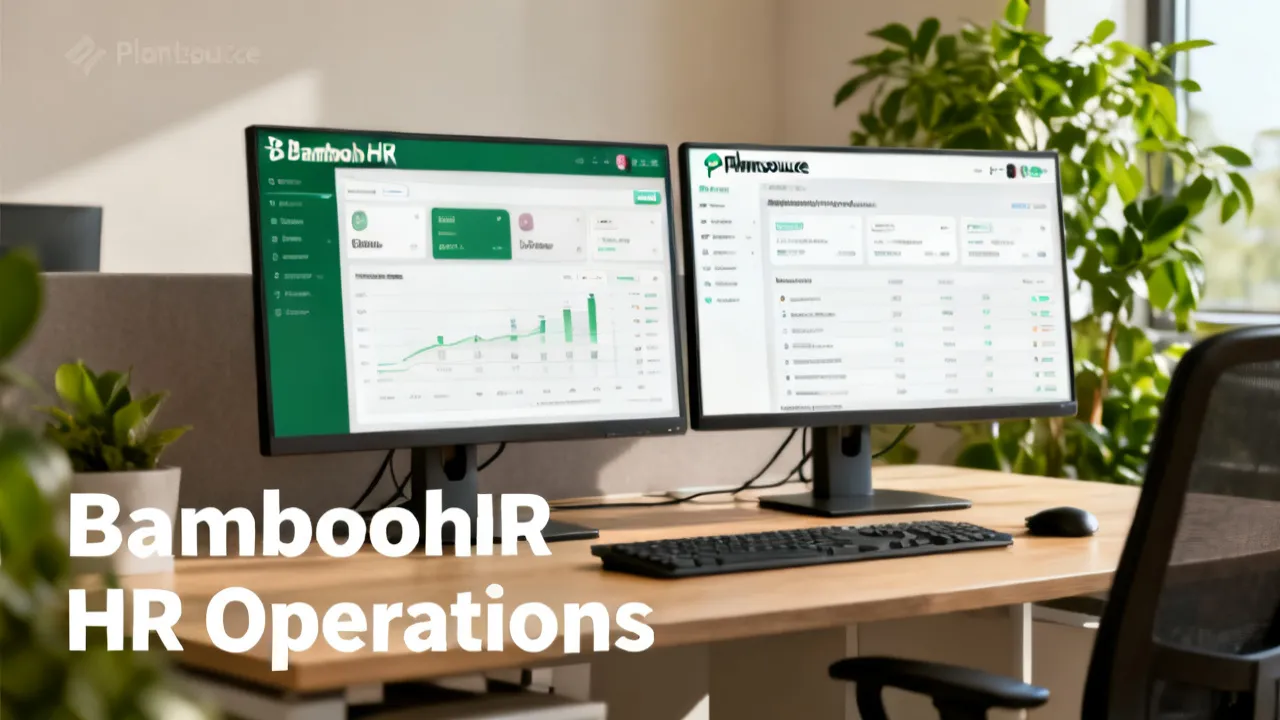
Organizations evaluating BambooHR alongside Plansource typically want to reduce manual handoffs between (1) employee data management, (2) recruiting/onboarding workflows, and (3) compensation-adjacent processes such as benefits planning, eligibility, and enrollment operations. The practical outcome isn’t simply “more software” or “better dashboards.” It’s a more predictable operational rhythm—cleaner records, fewer inconsistencies, faster decision cycles, and less confusion when multiple teams touch the same employee lifecycle events.
In many organizations, HR workflows fail less because people lack tools and more because data and responsibility are fragmented. The moment employee information changes (a name correction, work location update, or termination timing) there’s often a downstream impact on benefits eligibility, enrollment windows, and coverage start/end dates. If the organization doesn’t have a clear operating model that explains where each piece of information originates, who owns it, and how it flows, the result is usually a chain of manual updates that are hard to audit and harder to troubleshoot.
This article outlines a structured approach to assessment and implementation from an industry-expert perspective. It focuses on how to evaluate fit, plan for integration, define conditions for success, and design workflows that remain coherent when real HR edge cases occur.
BambooHR is commonly associated with human resources information management (HRIS) functions—employee profiles, workflow-driven onboarding, time-related processes, document management, and core HR administration tasks. Teams often leverage it to establish a “system of record” feel for employee lifecycle data, employee document trails, and onboarding steps that require HR attention.
Plansource is commonly positioned toward benefits administration and plan-related workflows—where enrollment events, eligibility rules, life events, deductions changes, and plan administration steps must be handled accurately and on schedule. In most benefit administration contexts, accuracy is not optional: eligibility determinations, effective dates, and coverage outcomes need traceability and consistency, especially when HR and benefits decisions have financial and compliance implications.
When combined under a single HR operating model, the goal is usually to connect employee lifecycle data (often managed in BambooHR) with benefits planning and enrollment events (often supported by Plansource). That value is only realized when data mapping, permission design, workflow ownership, and effective-date logic are agreed in advance. Without those, the integration becomes an expensive attempt to “sync” systems while the organization still lacks a unified process.
Therefore, the “keyword” comparison is less about whether one tool can do everything and more about whether each tool’s strengths can be stitched together into a coherent workflow narrative: employee record updates that affect eligibility should trigger benefits planning updates; benefits elections and life events that affect eligibility outcomes should be auditable and understandable back to the employee profile source.
Feature lists are useful for quick alignment, but integration success is usually determined by how consistent the combined experience is across teams. The hardest part of integrating HR platforms is rarely determining whether a specific UI form exists. The hardest part is ensuring the system behaves in the same way regardless of who makes the change, when the change is made, and what order changes occur in.
Consider common operational frictions:
These details determine outcomes like cycle time, error rates, and audit readiness. In regulated environments—or even in well-controlled internal audit contexts—these integration and governance details directly affect compliance posture. If you can’t explain “what changed, when, why, and who approved it,” you may not meet your own internal controls even if the data looks correct on the surface.
Most HR departments are under simultaneous pressure: improve employee experience, maintain accurate records, and reduce operational load. At the same time, organizations are expected to demonstrate process consistency for audits, benefits eligibility checks, and internal policy enforcement. That means HR teams must be able to show not only that benefits enrollment is correct but also that the process was executed according to defined rules and with traceable decisions.
As industry guidance often emphasizes, HR value increasingly depends on structured people-data management, policy adherence, and documented workflow consistency. For example, the Society for Human Resource Management (SHRM) frequently highlights HR’s role in governance, structured people-data practices, and consistent workflow execution—particularly around onboarding, compliance, and policy-driven processes. (Source: SHRM resources on HR operations and HR governance.)
In parallel, analysts and major research streams across HR technology transformation routinely stress the importance of integration, data quality, and disciplined governance as organizations attempt to reduce operational friction across a “stack” of HR tools. Even when specific vendor names differ, the broader themes converge: effective HR transformation isn’t just purchasing systems; it’s designing the operating model for how systems interact and how decisions are recorded. (Source: Gartner and other industry analysts’ research streams on HR transformation and HRIS/top-of-breed integration topics.)
That is exactly why BambooHR + Plansource should be approached as an operating model design challenge. If you treat it as an “integration project” only, you risk delivering technical synchronization without operational coherence.
While vendor capabilities can vary by configuration, contract scope, and customer environment, a common complementary pattern is:
In practice, this means employee onboarding triggers and HR record changes often must align with benefits eligibility windows. If an employee is onboarded mid-cycle, HR may need to ensure benefits readiness. If work location changes for an employee, benefits eligibility may depend on location-based rules. If termination is processed, benefits coverage needs effective date alignment and appropriate end-of-coverage logic.
The top implementations treat these as one integrated process: “employee lifecycle event” → “eligibility impact review” → “benefits workflow outcome.” They avoid splitting the program into separate onboarding and benefits initiatives that only touch at the edges.
It’s easy to lose months comparing vendors if you don’t define what you’re trying to connect. To avoid wasted time, start with a short discovery sequence that clarifies process boundaries, data expectations, and technical behaviors.
Only after these points are clear should teams perform feature mapping across BambooHR and Plansource. Feature mapping without operational alignment often produces a “works in demos” outcome that collapses under real HR timelines, especially around effective dates and correction handling.
| Evaluation Area | BambooHR (typical focus) | Plansource (typical focus) | What you should verify during fit testing |
|---|---|---|---|
| Primary HR data | Employee records, HR workflows, onboarding-related tasks | Benefits and plan administration workflows tied to eligibility | Which fields are authoritative for employment status, work location, and effective dates |
| Operational triggers | New hire events and employee profile updates | Enrollment windows and life event handling | How triggers behave when HR edits employee data after enrollment starts |
| Admin workload | HR admin tasks and workflow approvals | Benefits enrollment operations and plan administration steps | Which tasks remain manual and where handoffs create risk |
| Governance and audit support | Record history expectations for HR processes | Change tracking for benefits and enrollment actions | Document retention, approver visibility, and reporting consistency |
| Integration readiness | Capability to sync employee profile data to other systems | Capability to receive or align eligibility/enrollment-related inputs | Data mapping approach, field-level validation, and error handling |
The steps below are written as a practical implementation pattern. Actual integration paths vary by configuration, customer environment, and contract scope. Still, these are the conditions that typically determine whether onboarding and benefits workflows move forward reliably.
One way to think about the plan is to separate three “layers” that must work together:
Many organizations focus only on the data layer (the integration) and underinvest in process/control layers. That leads to technical synchronization but operational uncertainty.
Start by listing HR events that should lead to downstream outcomes, and explicitly name the workflow outcome in the benefits domain. This avoids vague objectives such as “sync employee data” or “enable enrollment.”
Examples:
Requirement: Document who initiates each event, what systems are updated, and what “done” means in the target system. “Done” might mean:
Expert practice: Build your model around effective dates and “windowed” processes. Benefits enrollment frequently relies on time windows and effective date logic, so your workflow model should treat those as first-class objects, not incidental metadata.
Integration fails very often at the “middle layer,” where fields don’t mean the same thing. For example, “work location” in an HRIS might reflect office assignment, while “worksite” in benefits might reflect eligible tax jurisdiction, plan eligibility, or service area. If you map them incorrectly, the system can appear to be working while eligibility logic becomes wrong.
Requirement: Create a data dictionary that defines:
From an expert perspective, insist on validation rules that prevent bad records from silently propagating into benefits eligibility logic. Silent failures are more dangerous than visible failures because they create subtle inaccuracies that may be discovered only during payroll reconciliation, employee support calls, or internal audit reviews.
Validation should include:
HR operations depend heavily on effective dates. If a work location change occurs after an enrollment window opens, the business must know whether it affects eligibility, triggers a special handling process, or requires recalculation of plan options.
Requirement: Decide:
Effective date logic is often where the biggest misunderstandings occur. An experienced integration team will treat effective dates as part of the workflow contract. For example:
Expert practice: Define both “system effective date” and “process effective date” concepts if necessary. Sometimes the system might accept a change immediately but business rules require it to take effect only at a specified time. Clarify which behavior you need, and then test it thoroughly.
Even with perfect integrations, you can still end up with errors if permissions are inconsistent. For example, if HR admins edit employee profiles but benefits specialists can’t see or verify those edits, the workflow fractures. Conversely, if benefits specialists can edit certain HR-related fields without control, you can create conflicting sources of truth.
Requirement: Define:
For audit readiness, permissions aren’t only about access. They’re about controllability. You want to be able to answer: “Who had the ability to make this change?” and “Who approved the decision?”
Practical role design often includes:
Expert practice: Perform permission testing with real personas—not just “admin vs non-admin.” Some systems allow partial editing, and you must confirm what actions users can take and what they can view for verification.
Teams often test “happy paths” only: clean records, timely inputs, and ideal sequences. Better testing includes messy reality—because HR corrections and exceptions are normal, not rare.
Condition set for testing:
Requirement: Confirm reporting and audit logs show consistent results across both tools. Specifically, ensure you can trace:
Expert practice: Include negative tests. For example, test what happens when an invalid state code is submitted or a required field is missing. Determine whether the integration rejects the record, queues it, or applies fallback rules—and then decide which behavior is acceptable from an operational and compliance perspective.
Training should address how employees experience changes and how HR teams handle exceptions. HR technology becomes “effective” only when the organization’s people-process around it is ready: when people know how to correct data, when they know where to look for errors, and how quickly they know how to escalate.
Requirement: Create concise job aids for:
Beyond job aids, establish internal support processes. For instance:
Expert practice: Train in the order of operations: first the “source-of-truth update” behaviors, then the “how it triggers benefits outcomes,” and finally the “how to correct and reprocess” steps. That sequence reduces confusion because it mirrors actual cause-and-effect in HR.
Go-live should include monitoring metrics and clear response steps. If errors occur, you need a way to pause or roll back safely. In HR operations, a “rollback” may not mean undoing everything automatically—sometimes it means freezing new enrollments while you validate eligibility outcomes, or switching to a controlled manual workflow temporarily.
Requirement: Establish:
Define monitoring metrics that connect directly to operational reality:
Expert practice: Have a “pause criteria” document. For example: if enrollment options fail for more than X employees or if effective date mismatches are detected beyond Y threshold, you pause automated enrollments and switch to controlled processing while the root cause is addressed.
The user prompt included “price information,” but no specific prices were provided. Because HR software pricing is typically dependent on variables such as number of employees, contract term, modules, integrations, implementation scope, and support level, the most defensible procurement approach is to request formal quotes for your configuration.
However, “request quotes” shouldn’t mean “ask vague questions.” You should structure pricing discussions so you can compare proposals apples-to-apples and avoid unpleasant surprises later.
Expert recommendation: When you ask for pricing, request a breakdown that distinguishes:
If a vendor provides a “per employee per month” figure, ask how it changes with plan count, module selection, user roles, benefit event volumes, or special compliance needs. If implementation is quoted as a fixed package, ask what’s explicitly included—especially regarding:
Expert practice: Make sure the procurement language is aligned with the operating model. If your HR event-to-workflow model requires specific behaviors (e.g., backdated start date handling, re-evaluation triggers after corrections), confirm those behaviors are included in implementation scope or explicitly excluded.
Because “supplier details” weren’t specified as a vendor-by-vendor request, treat supplier evaluation as a broader fit and delivery capability assessment. For both BambooHR-like and Plansource-like suppliers, procurement teams typically need evidence across implementation maturity, integration method, security posture, and support model.
Specifically request evidence for:
Expert practice: Ask for examples of how other organizations handled specific edge cases—especially cases tied to effective dates, corrections after enrollment starts, and reporting reconciliation. Your goal isn’t to copy their setup; it’s to learn how mature their delivery process is when reality differs from the demo.
Below is a concise “conditions” checklist that HR and IT teams can use to determine readiness. These conditions represent commonly accepted top practices in HR technology programs and reflect principles seen in HR system implementation and integration governance work.
| Category | Condition / Requirement | Why it matters |
|---|---|---|
| Data governance | Documented source-of-truth per field | Prevents inconsistent employee records and benefits eligibility errors |
| Security | Role-based access and auditability across both tools | Supports internal controls and audit readiness |
| Integration | Clear data mapping and validation rules | Reduces synchronization failures and downstream rework |
| Operational ownership | Named owners for HR events and exception workflows | Stops ambiguity during real-world edge cases |
| Testing | Test cases include life events, late edits, and correction scenarios | Ensures reliability beyond demos |
| Change management | Training and internal job aids are delivered before go-live | Improves adoption and reduces avoidable support tickets |
In large HR technology rollouts, experts often emphasize a few recurring lessons. These lessons are consistent across HRIS upgrades and benefits administration integrations.
In other words, success is veryly operational discipline: documentation, validation, permissions, training, and test coverage. The integration’s technical success is only half the story; the operational success is what HR and employees will feel.
These are common failure modes when HRIS and benefits administration workflows are combined. They can be mitigated during planning and testing, but only if you actively look for them.
The primary value is operational cohesion: HR record management and onboarding workflows can align with benefits enrollment and eligibility-related processes. When effective-date logic and data mapping are handled well, organizations typically see fewer manual corrections, more predictable enrollment outcomes, and improved clarity for HR and benefits administrators.
In practice, this often translates to fewer “we changed something in HR but benefits didn’t update” situations, and faster resolution when corrections are needed. Employees can also experience smoother benefits enrollment processes because eligibility inputs are more consistently managed.
No. Many organizations keep existing processes while using integration to reduce duplicate entry and improve data consistency. A phased approach—starting with the highest-risk or very time-consuming workflow—often produces better adoption than a big-bang replacement.
For example, you might first integrate employee profile updates needed for eligibility and onboarding readiness, then later expand to life-event-driven enrollment updates once the first phase is stable.
Decide in advance which system is authoritative for specific fields and whether corrections trigger re-evaluation of eligibility. Your integration should include validation rules and an audit-friendly exception process so HR and benefits administrators can resolve errors without guesswork.
Consider the operational behavior needed for corrections:
The answers should be documented and tested as part of fit testing.
Confirm integration readiness (data interfaces and mapping support), audit/reporting consistency, role/permission behavior, effective-date handling, and how exceptions are processed. Then validate these claims through structured test cases that mimic real HR activity.
Feature lists alone don’t reveal:
No. HR software pricing typically depends on employee count, module selection, integration scope, contract term, and implementation services. Additionally, benefits administration implementations can vary widely based on plan complexity, number of benefit offerings, and the frequency and complexity of enrollment events.
Request a formal quote for your configuration and ensure implementation and integration responsibilities are clearly documented, including test scope and support expectations during go-live.
Yes. Require role-based access control, audit logs, secure data handling practices, and documented policies for how employee data is protected. Also ensure that the integration supports traceability—especially for benefits-related changes tied to eligibility.
Security questions should include:
Have an incident response plan: monitoring triggers, named owners, escalation paths, and a rollback or pause procedure. Include a validation checklist so HR and benefits administrators can confirm eligibility outcomes after any corrective action.
A strong go-live plan clarifies whether you:
Focus on operational outcomes rather than just system usage. Common metrics include reduction in manual rework, fewer data discrepancies, faster time-to-completion for onboarding-to-benefits readiness, and improved audit confidence.
Choose measures that match your initial event-to-workflow model. For example, if the original goal is to reduce handoffs, measure the number of steps requiring manual copying of data across teams. If the goal is audit readiness, measure the completeness of audit trails and the time required to resolve audit questions.
For organizations comparing BambooHR and Plansource, the most reliable path to value is to frame them as components of a unified HR operating system—one that manages employee lifecycle data and benefits workflow outcomes through consistent effective-date logic, strong governance, and exception-ready processes. By approaching integration with disciplined data mapping, role ownership, and realistic testing scenarios, you can reduce friction between HR administration and benefits operations, resulting in a workflow that feels dependable to both administrators and employees.
When the operating model is coherent, integration becomes more than data syncing—it becomes operational clarity. That clarity reduces risk, improves responsiveness during HR changes, and helps HR teams demonstrate consistent control over critical employee and benefits-related processes.
Striking the Perfect Balance: Navigating Premiums and Out-of-Pocket Expenses in Senior Insurance Plans

Explore the Tranquil Bliss of Idyllic Rural Retreats

How to Make Lasting Memories at Disneyland Attractions

4rkojvsx Technology: Industry Insights and Buying Guide

Affordable Phones and Plans for Seniors

Affordable Full Mouth Dental Implants Near You

Unlock the Top Kept Secrets to Finding Your Ideal Dentist for Flawless Dental Implant Results!

Discovering Springdale Estates

Unveiling RS Sul Telecom Services


Understanding 60817674500: Pricing, Supplier Signals, Quality Steps
This guide explains how to interpret the numeric keyword 60817674500 in procurement contexts, how pricing is commonly structured, and what supplier information should be verified before ordering. Objectively, it discusses what such identifiers often represent, why supplier traceability matters, and which due-diligence steps reduce delivery and compliance risk.

822478979788877878878897979797 Buyer’s Guide
This guide explains how to evaluate 822478979788877878878878897979797 procurement decisions with an objective lens. It outlines what the code typically signals in supply-chain workflows, how to verify supplier readiness, and which due-diligence steps reduce risk. You’ll also find a comparison framework, requirements, and practical FAQs for informed purchasing.

PrismaJOY Buying Guide: Requirements, Suppliers, and Pricing
PrismaJOY is a structured solution-focused product guide aimed at helping buyers evaluate sourcing, pricing factors, and implementation readiness. Objectively, PrismaJOY is discussed in terms of how “JOY” features map to selection criteria, compatibility, and supplier support in day-to-day procurement and deployment workflows, emphasizing due diligence and documented requirements.

PrismaJOY Guide: Pricing, Suppliers, and Buying Conditions
This guide explains how to evaluate PrismaJOY for responsible purchasing decisions, focusing on pricing structure, supplier credibility, and practical requirements. Objectively, PrismaJOY is presented as a brand name associated with consumer products, while “supplier” refers to the distribution chain that impacts delivery, warranty handling, and service responsiveness.

How Multishop Streamlines Modern Multi-Vendor Selling
This guide explains how Multishop supports multi-vendor commerce by connecting catalogs, orders, and supplier workflows in a single operational view. In objective background terms, multi-vendor platforms exist to reduce duplication of product and fulfillment management, while improving governance through standardized pricing rules, inventory updates, and supplier controls.

Understanding Gordo9498416253t and Related Product Options
This guide explains how to evaluate Gordo9498416253t-type listings and nearby supply options, focusing on how buyers can verify pricing, supplier credibility, and compatibility before purchase. Objectively, the keyword “Gordo9498416253t” functions as a listing identifier-like term, while “related product options” reflects the broader need to compare sellers, documentation, and performance claims using reliable sourcing and practical checks.
